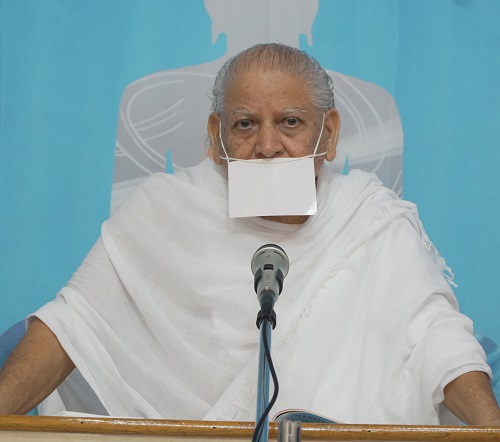
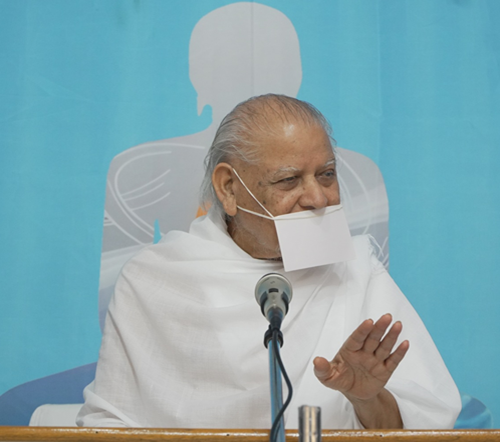
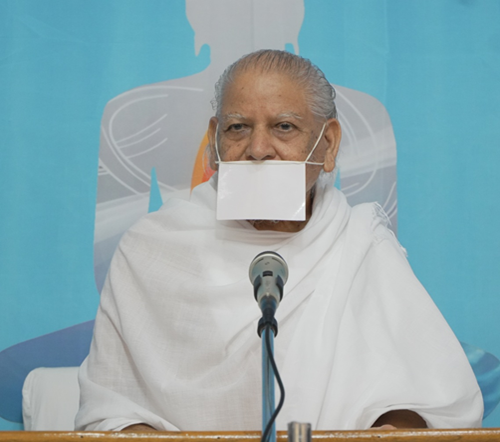
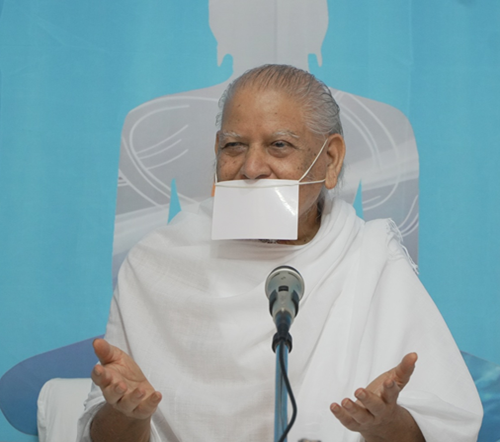
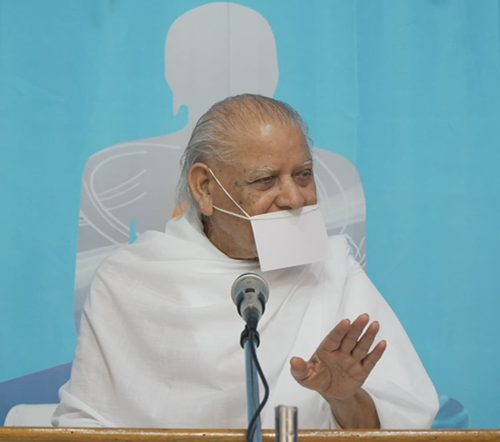
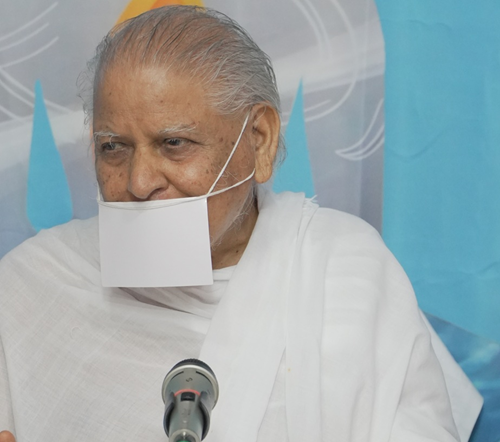
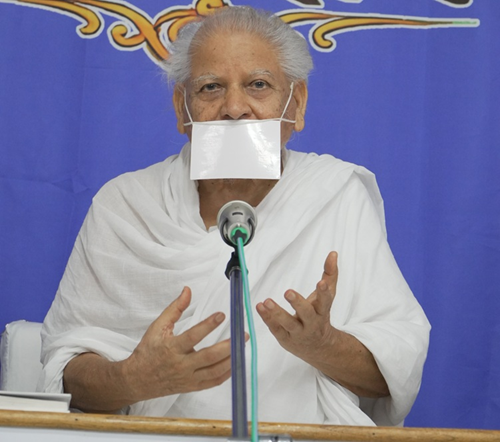
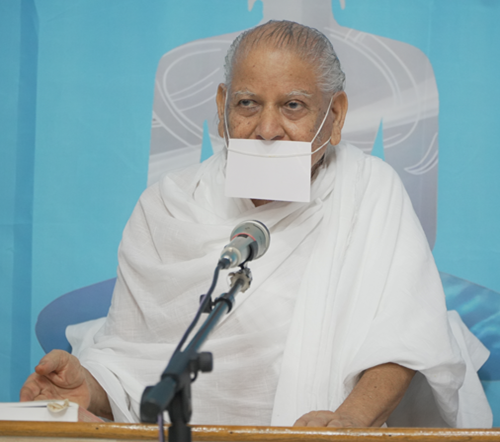
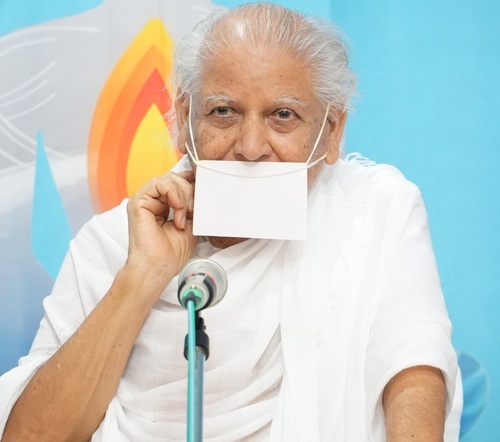
In his discourse on Samadhi Tantra, Acharya Samrat Dr. Shri Shivmuni Ji M.Sa. stated that one should renounce the Bahiratma (the self identified with the external world) and abide in the Antaratma (the inner self). By letting go of all mental fluctuations and conflicting thoughts (sankalpa-vikalpa), one should contemplate and meditate upon the Supreme Soul (Paramatma). The Bahiratma state is the cause of wandering through the cycle of worldly existence (samsara). One who renounces the Bahiratma and contemplates the Supreme Soul attains the state of Antaratma.
Discussing the three types of the soul, he explained that there are three forms: Bahiratma, Antaratma, and Paramatma. The Bahiratma is the soul drawn towards the worldly realm—entangled in material objects, individuals, possessions, places, social groups, and the notions of “mine” and “thine.” A Bahiratma is one whose attraction lies in the physical body, personality, and the family or wealth associated with the body; everything such a person does is for the sake of the body.
Acharya Bhagavan further explained that a person might have performed virtuous deeds (punya) or practiced charity, moral conduct (sheel), and penance (tapa) in past lives; however, if the ultimate goal was undefined and they lacked true realization (bodh) and knowledge (gyan), they ended up returning to the cycle of worldly existence. It is akin to a person who loses their way because they do not know the address of their destination; they wander about, asking for directions. A lack of realization regarding one’s true existence constitutes the Bahiratma state. One must renounce the Bahiratma and enter the Antaratma.
He noted that the human mind wanders because its nature resembles a clock’s pendulum—constantly swinging back and forth. The mind drifts into the past or the future but rarely stays in the present moment. Even the Lord (Tirthankara) was once a worldly being; however, He attained self-realization, knowledge, and true vision (drishti), shattered the delusion of false belief (mithyatva), attained Kevala Jnana (Omniscience), and became a liberated soul—perfect (Siddha), enlightened (Buddha), and free.
In his address, Pramukh Mantri Shri Shirish Muni Ji M.S. stated that if one looks around the world, true happiness is nowhere to be found; genuine happiness resides solely within the soul. One must contemplate whether to squander this life or utilize it for the sake of the soul—such introspection constitutes a process of inner inquiry. This inquiry naturally gives rise to a sense of detachment (vairagya) from within. Once this detachment emerges, worldly attachments (raag) cease to arise. While the entire world seeks happiness in material objects (pudgal) and worldly existence, one must realize that happiness does not exist in people, things, or places. Observing the world reveals that those with nothing are unhappy, while the wealthy suffer from insatiable craving (trishna) and remain trapped in its web.
Sahamantri Shri Shubham Muni Ji M.S. presented a devotional song (bhajan) titled “Har saans mein ho simran tera, yun beet jaaye jeevan mera” (May I remember You with every breath; may my life pass in this manner).
Devotees from places such as Indore, Kolkata, Chhindwara, and Raipur attended today’s gathering to seek the Guru’s blessings.
Shri Shantilal and Smt. Suman Ostwal from Bhilwara took the vow (pratyakhyan) for an eight-day fast via the online platform; additionally, other practitioners—both online and in person—took vows to observe various austerities such as fasting, Ekasan (eating once a day), and Ayambil.