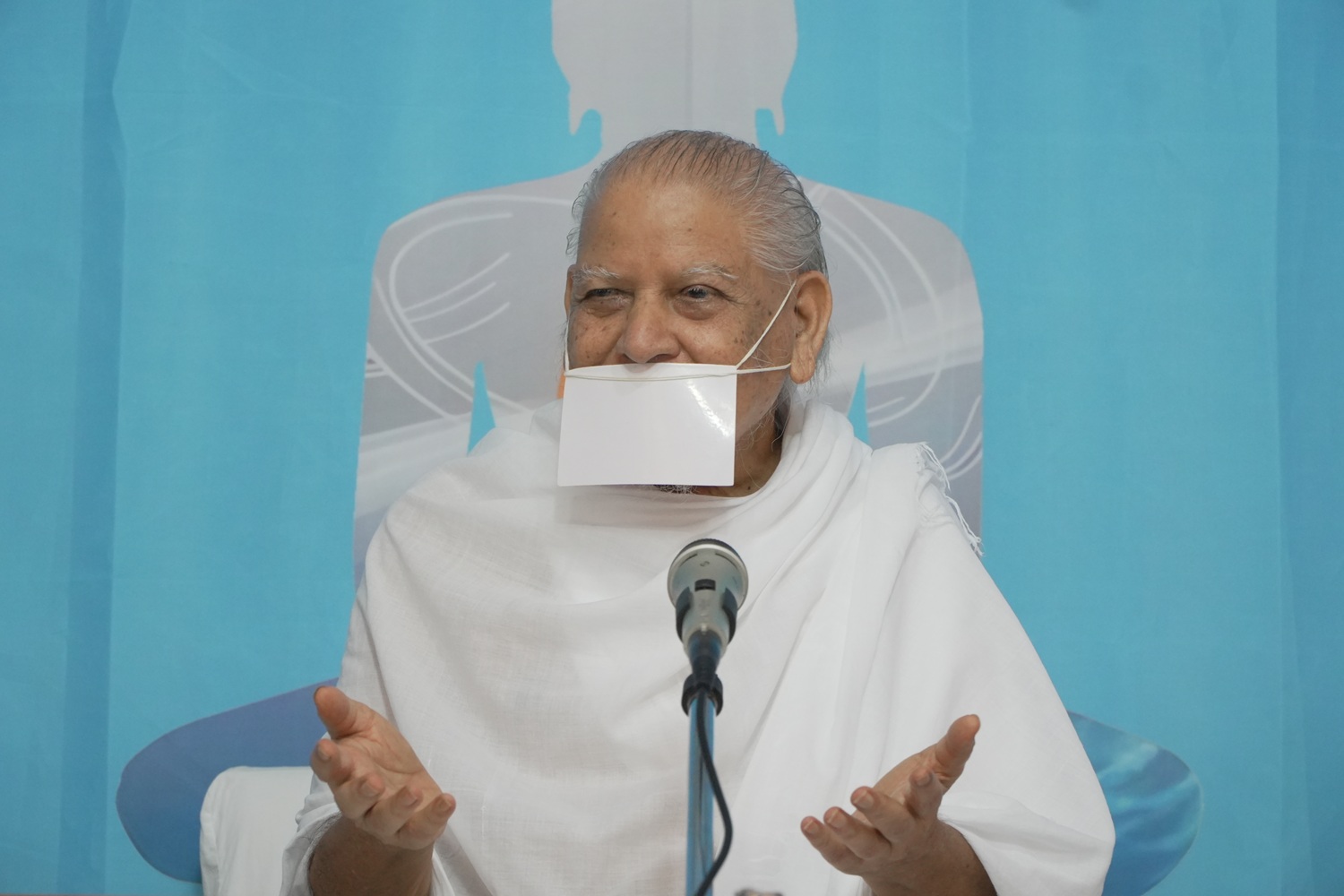
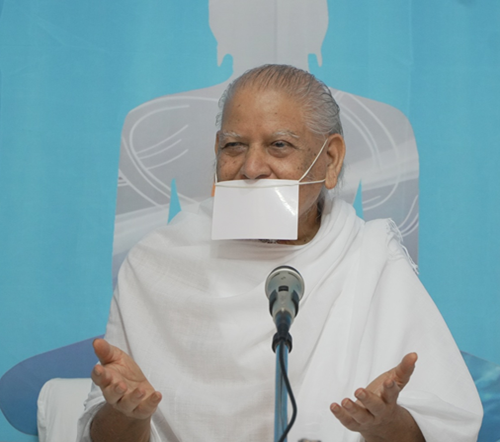
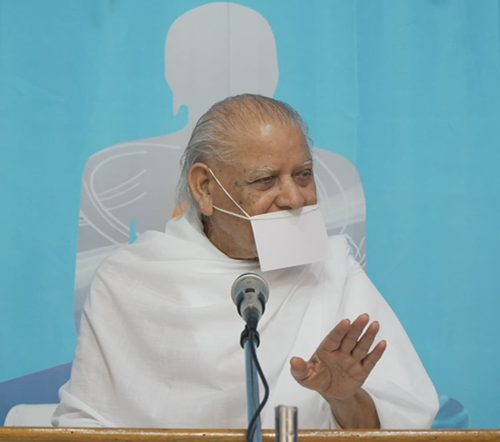
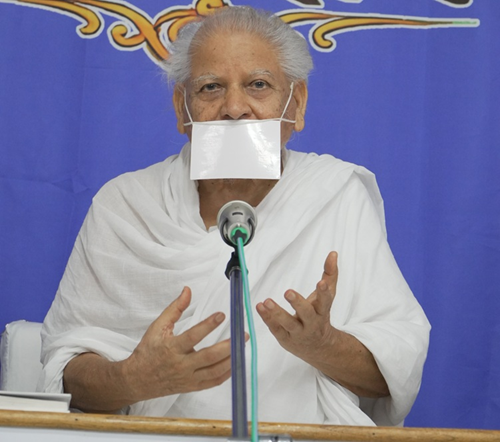
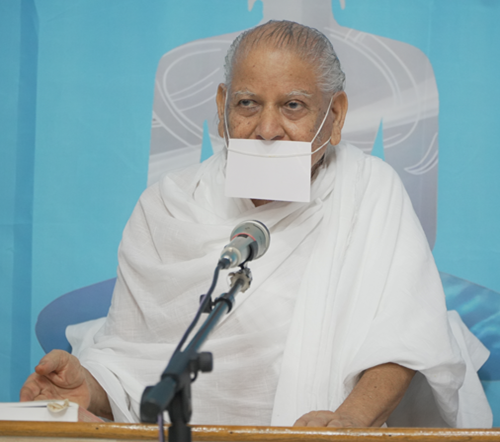
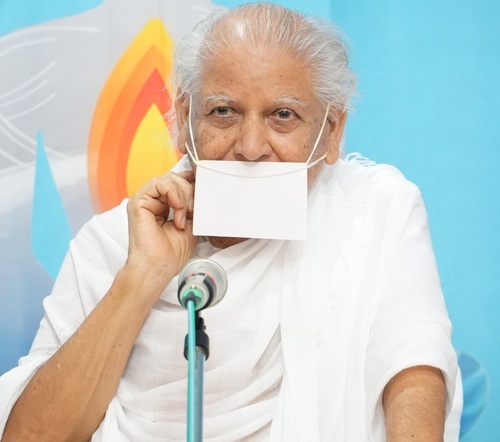
In his discourse, while discussing the Samadhi Tantra (the science of spiritual absorption), Acharya Samrat Dr. Shri Shivmuni Ji M.Sa. stated that when a person deeply internalizes the realization that “I am truly a soul of pure consciousness,” their attachments and aversions (raga-dvesha) cease to exist within this very lifetime. A seeker of the self understands that they have neither enemies nor friends; they are simply a pure, eternal soul. The extent to which an individual can mold themselves into this state and abide within the soul is a matter for self-introspection.
Citing the episode of Seth Sudarshan, Acharya Bhagavan explained that Seth Sudarshan was a man of wisdom who understood the nature of the living (jiva) and the non-living (ajiva); he was a prominent merchant who had access to the royal palace. Upon his visits to the palace, the queen became infatuated with him. Seth Sudarshan told her, “You are the King’s wife, and a King’s wife is like a mother.” When his words failed to dissuade her, the queen leveled a false accusation against him, claiming that he had committed misconduct with her.
The King reasoned that since the queen herself was making the claim, it could not be impossible. Seth Sudarshan remained calm, even as the King ordered his execution by impalement. As he faced the stake, Seth Sudarshan took refuge in Dharma (righteousness); miraculously, the stake transformed into a throne, and he was hailed with acclaim. One who lives under the shelter of Dharma is always celebrated, and their life becomes filled with bliss.
He further stated that a ‘Mahapurush’—a truly self-realized soul—is one who maintains equanimity (samabhav) regardless of the circumstances encountered in life, whether it be profit or loss, happiness or sorrow, birth or death, criticism or praise, or honor or insult. Figures such as Lord Rama, Lord Mahavira, and Mahatma Buddha all faced both honor and insult in their lives. Because they were seekers of the self, they maintained equanimity even in adverse situations and attained greatness.
One should make it a life goal to nurture one’s existence rather than merely one’s personality. Many saints and great souls renounced their homes and families; even when faced with adversities, they endured them with equanimity and attained the liberated state of the enlightened (Siddha-Buddha).
In his address, Pramukh Mantri Shri Shirish Muni Ji M.S. stated that a living being truly possesses nothing; yet, the mind is filled with the delusion and false belief that “this body is mine.” Consider a person living in a rented house: whether it is a home or a shop, if the landlord asks the tenant to vacate, the tenant must leave.
Similarly, one is compelled to vacate this “house” of the body at the end of life. Suffering arises when there is attachment and a sense of ownership regarding the body. A spiritual seeker who constantly reinforces the understanding that “this body is not mine; I am merely residing in it like a tenant” does not experience anguish when relinquishing the body at the final moment; this state is known as Samadhimaran (a peaceful, conscious, and spiritually composed death).
Sahamantri Shri Shubham Muni Ji M.S. presented a bhajan (devotional song) with the lyrics: “There is still time; take spiritual strength with you, and you shall journey to the abode of liberation (Mokshapuri) to find eternal bliss.”
Joining online from Bhilwara, Shri Shantilal and Smt. Suman Ostwal took the vow (pratyakhyan) to observe a six-day fast. Additionally, other spiritual aspirants—both online and in person—took vows to undertake various penances such as fasting, Ekasan (eating a single meal a day), and Ayambil (a specific form of fasting involving simple, unspiced food).