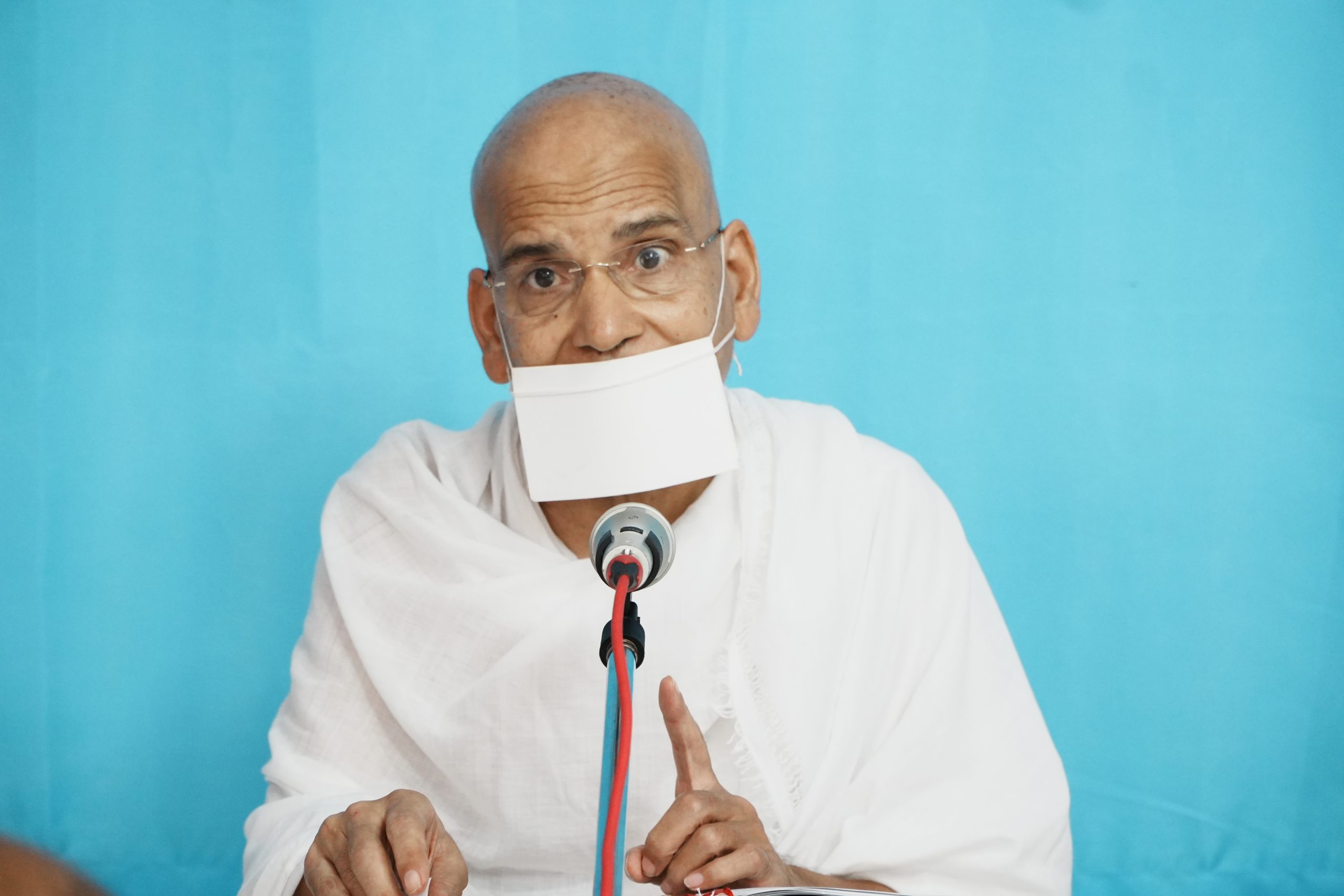
आज की सभा में आचार्य भगवन् ने जड़ जीव का भेद करवाते हुए आत्म ध्यान का प्रयोग करवाया। आत्म ध्यान के प्रयोग में आचार्य भगवन ने फरमाया कि आत्मा में परमात्मा है। आत्मा में परम तत्व है। तुम ही परमात्मा हो, जिस क्षण देह की पकड़ पूर्ण छूट गई उसी समय तुम परमात्मा हो। परमात्मा का साक्षात्कार करने के लिए भीतर में मोह ममत्व का त्याग करना है। चाहे मोह अपनी देह से हो या सम्बन्धों से हो। मोह का नाश होते ही भीतर का कैवल्य प्रकट होगा। भीतर का परमात्मा प्रकट होगा। वर्तमान स्थिति में ध्यान करते हुए देह की पकड़ भी मोह है। तुम विचार नहीं हो, विचार आत्मा के नहीं है। विचारों का भी त्याग करो। अपने में विश्राम प्राप्त करें। यही सुख है, यही शांति है, यही परमात्मा है।
इससे पूर्व प्रमुख मंत्री श्री शिरीष मुनि जी म.सा. ने अपने उद्बोधन में तत्वार्थ सूत्र के नवें अध्याय में फरमाया कि जो राग-द्वेष की ग्रंथि से रहित है, जो मिथ्यात्व की ग्रंथि से बंधा हुआ नहीं है वह निर्ग्र्रन्थ कहलाता है। जैन दर्शन में वीतराग यात्रा तभी शुरू होती है जब मिथ्यात्व और मोह का त्याग होता है। जैन दर्शन त्याग प्रधान धर्म है, जिसमें कुछ ग्रहण नहीं अपितु त्याग करने के लिए बताया गया है। मैं मेरेपन का भाव, मेरा गांव, मेरा परिवार, मेरा नाम, मेरा व्यापार, मेरेपन की चारों ओर से जो पकड़ है, वह जीव का नहीं वह पुद्गल का है, वह मिथ्यात्व है उसका त्याग करना है।
उन्होंने आगे फरमाया कि व्यक्ति यह विचार करे कि इस देह में जीव थोड़े दिनों के लिए पड़ाव समझकर रहने के लिए आया है। जिस प्रकार जैन साधु विहार करते समय एक पड़ाव से दूसरे पड़ाव पर जाते हैं। उस पड़ाव में रात्रि विश्राम के लिए एक या दो रात्रि रूकते हैं। जैसा भी स्थान मिला वहां रात्रि विश्राम करना है और अगली सुबह विहार करना है। उस पड़ाव के प्रति अनुकूलता-प्रतिकूलता की चाह नहीं होती। व्यक्ति को यह समझ में आ जाए कि जीव अनादिकाल की यात्रा करते-करते इस पड़ाव में आ गया है। जीव को उदय कर्म के अधीन यह पड़ाव शरीर, घर, परिवार, शहर मिला है। वह अपने कर्मों के अनुसार मिला है। लेकिन इस देह रूपी पड़ाव के प्रति मोह कर जीव ने पड़ाव को अपना माना यही मिथ्यात्व है उसी का त्याग करना है। मिथ्या भ्रांति के त्याग से मोह क्षय हो जाएगा।
प्रवचन प्रभाकर श्री शमित मुनि जी म.सा. ने ‘‘आ गा ले प्रभु के गीत तेरे दिन बीते जाते हैं’’ भजन द्वारा अपनी भावनाएं व्यक्त की।
आज की सभा में मुंबई, बुढ़लाढा, रायचुर, यादगिरी आदि जगहों से श्रद्धालु उपस्थित हुए।
विशेष – ध्यान योगी आत्मज्ञानी सद्गुरुदेव आचार्य सम्राट डॉ. श्री शिवमुनि जी म.सा. द्वारा आत्म ध्यान साधना के प्रयोग आदिनाथ टीवी चैनल पर प्रतिदिन प्रातः 5.00 बजे से प्रसारित किया जा रहा है।
In today’s assembly, Acharya Bhagavan guided the gathering in the practice of ‘Self-Meditation’ (Atma-Dhyan) while elucidating the distinction between the insentient (matter) and the sentient (soul). During the practice, Acharya Bhagavan stated that the Supreme Soul (Paramatma) resides within the soul; the soul itself embodies the supreme essence. You are the Supreme Soul; the very moment the grip on the physical body is completely released, you become the Supreme Soul. To realize the Supreme Soul, one must renounce internal attachment and possessiveness—whether that attachment is towards one’s own body or towards relationships. As soon as attachment is destroyed, inner Kaivalya (absolute liberation/enlightenment) will manifest, and the Supreme Soul within will be revealed. In the current state of meditation, even the attachment to the body is a form of Moh (delusional attachment). You are not your thoughts; thoughts do not belong to the soul. Renounce thoughts as well. Find rest within yourself. This is happiness; this is peace; this is the Supreme Soul.
Earlier, in his address, Pramukh Mantri Shri Shirish Muni Ji M.S. referred to the ninth chapter of the Tattvartha Sutra, stating that one who is free from the knot of attachment and aversion (Raga-Dvesha) and is not bound by the knot of delusion (Mithyatva) is known as a Nirgrantha. In Jain philosophy, the journey towards becoming Veetarag (free from attachment and aversion) begins only when delusion and attachment are renounced. Jain philosophy is a religion centered on renunciation; it teaches not the acquisition of things, but rather the act of letting go. The sense of “I” and “mine”—my village, my family, my name, my business—and the all-encompassing grip of possessiveness belong not to the soul but to Pudgal (matter); this is delusion (Mithyatva), and it must be renounced.
He further stated that one should contemplate the fact that the soul has come to reside in this body merely for a brief sojourn—viewing it as a temporary stopover. Just as Jain monks move from one halting place to another during their vihar (ritual journey), staying at each stop for only a night or two—resting wherever accommodation is available and resuming their journey the next morning—they harbor no attachment or aversion toward any specific stop. Similarly, one must realize that the soul has arrived at this current stage of existence after a journey spanning beginningless time. The soul has acquired this body, home, family, and city as a result of the fruition of its past karma; these were obtained in accordance with those deeds. However, the soul’s attachment to this body—viewing this temporary halting place as its own—constitutes Mithyatva (delusion or false belief), and it is this very attachment that must be renounced. By relinquishing this false notion, the attachment itself will dissolve.
Pravachan Prabhakar Shri Shamit Muni Ji M.Sa. expressed his sentiments through the bhajan (devotional song): “Aa Ga Le Prabhu Ke Geet, Tere Din Beete Jaate Hain” (Come, sing the Lord’s songs; your days are slipping away).
Devotees from places such as Mumbai, Budhlada, Raichur, and Yadgir attended today’s gathering.
Special Note: Sessions on self-meditation practice, led by the meditation adept and self-realized spiritual master Acharya Samrat Dr. Shri Shivmuni Ji M.Sa., are being broadcast daily at 5:00 AM on the Adinath TV channel.
भारतीय धर्मों में मोक्ष की अवधारणा पर शोध करते हुए मैंने जाना कि सब धर्मों में कॉमन है – ध्यान । तीस वर्षों की मेरी ध्यान साधना का सार है- “ आत्म ध्यान ” । यह कम्प्यूटर के डिलीट बटन की तरह साधक के मन मानस से गैरजरूरी यादें, संस्मरण, नकारात्मकता डिलीट कर देता है। अंतर्मन शांत, शुद्ध और सात्विक हो जाने से आत्म ध्यान का साधक सकारात्मक सोचने लगता है।
WhatsApp us