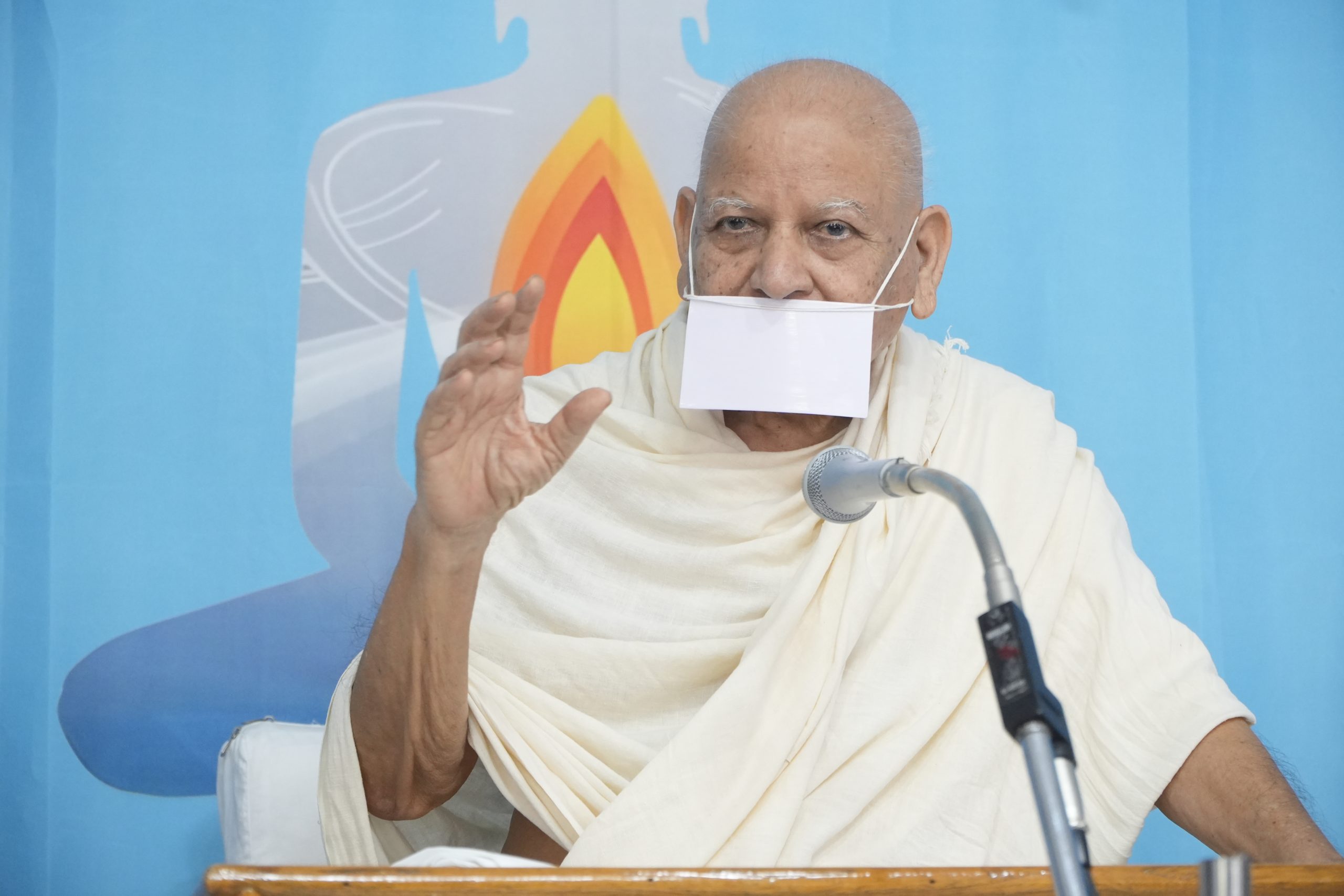
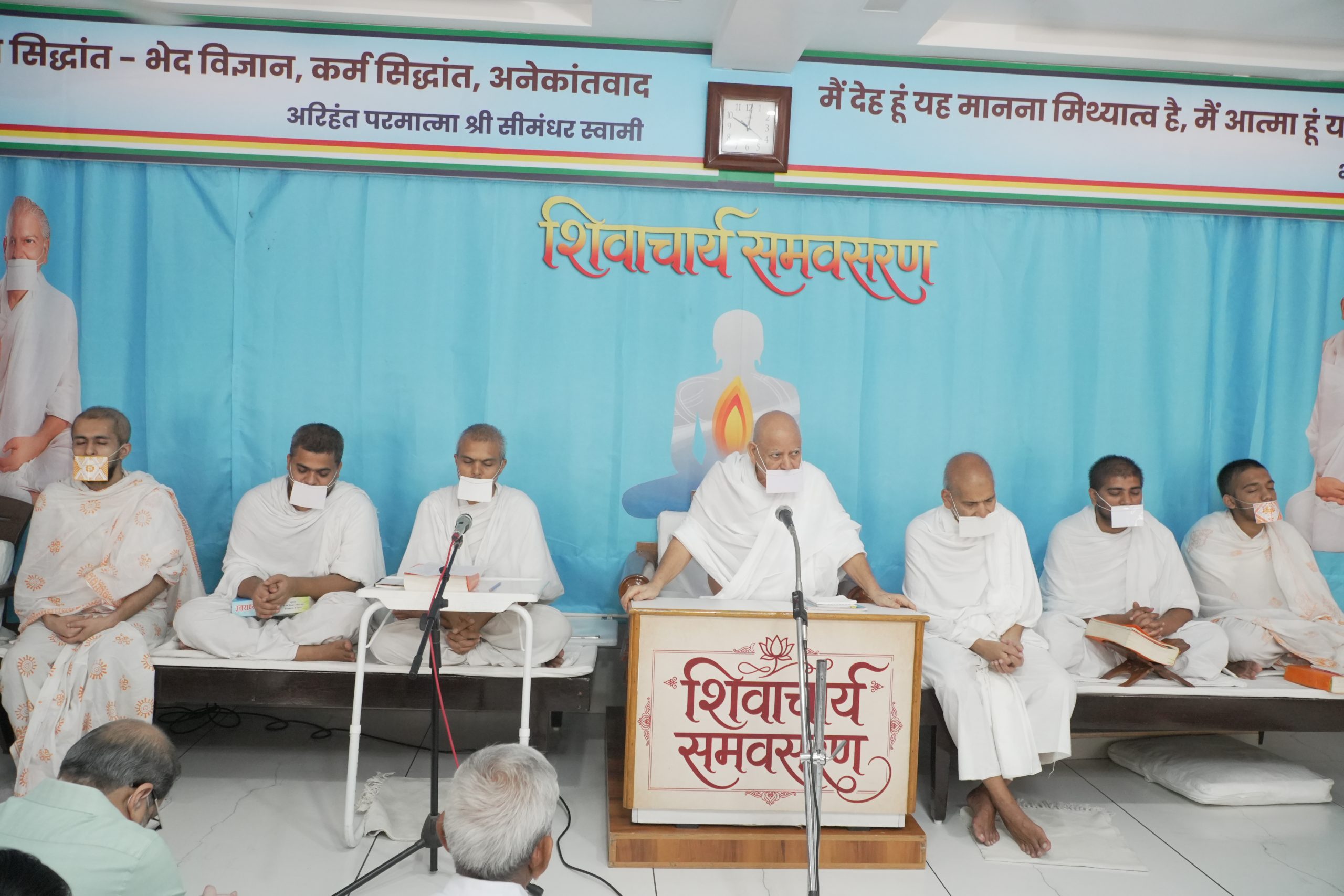
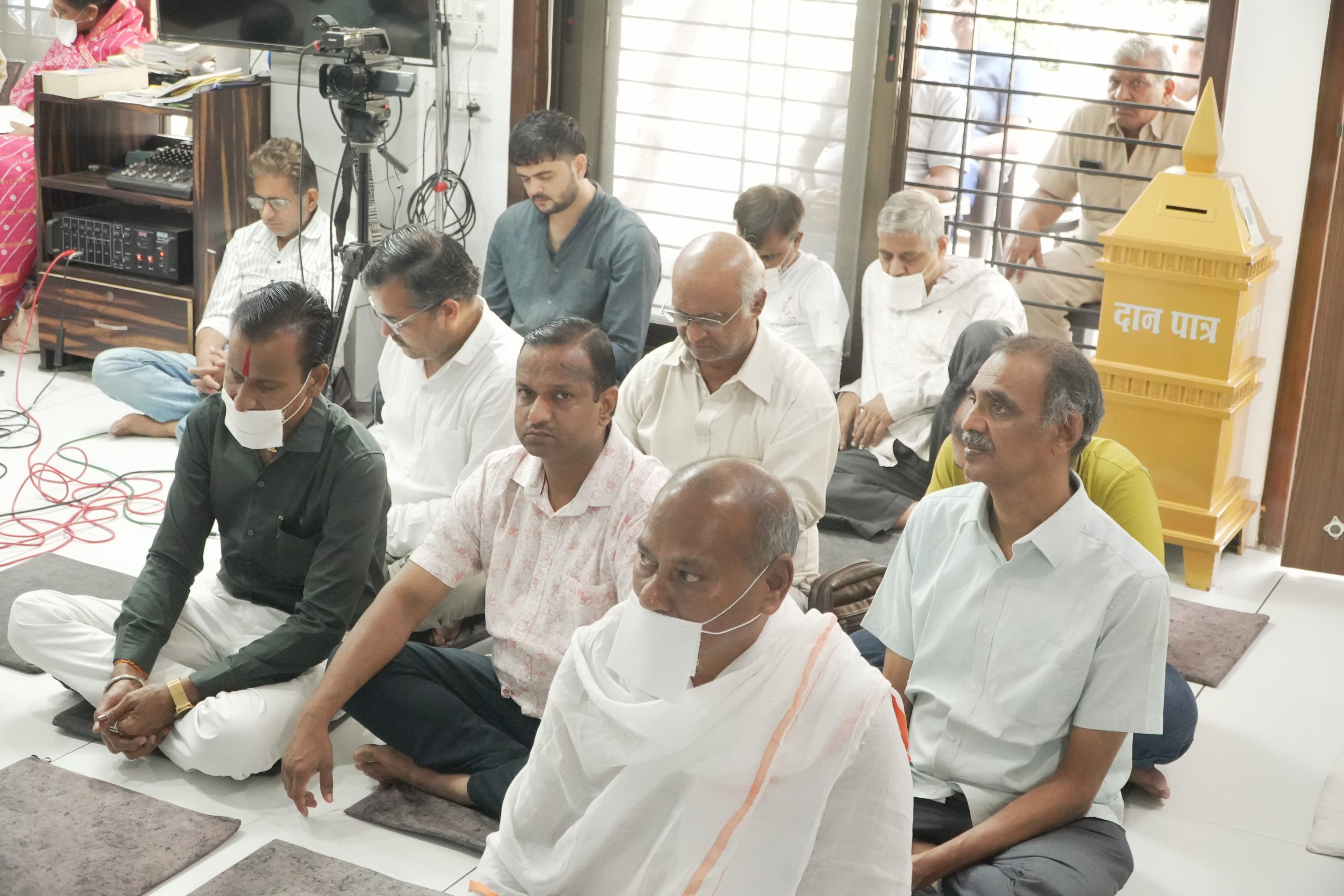
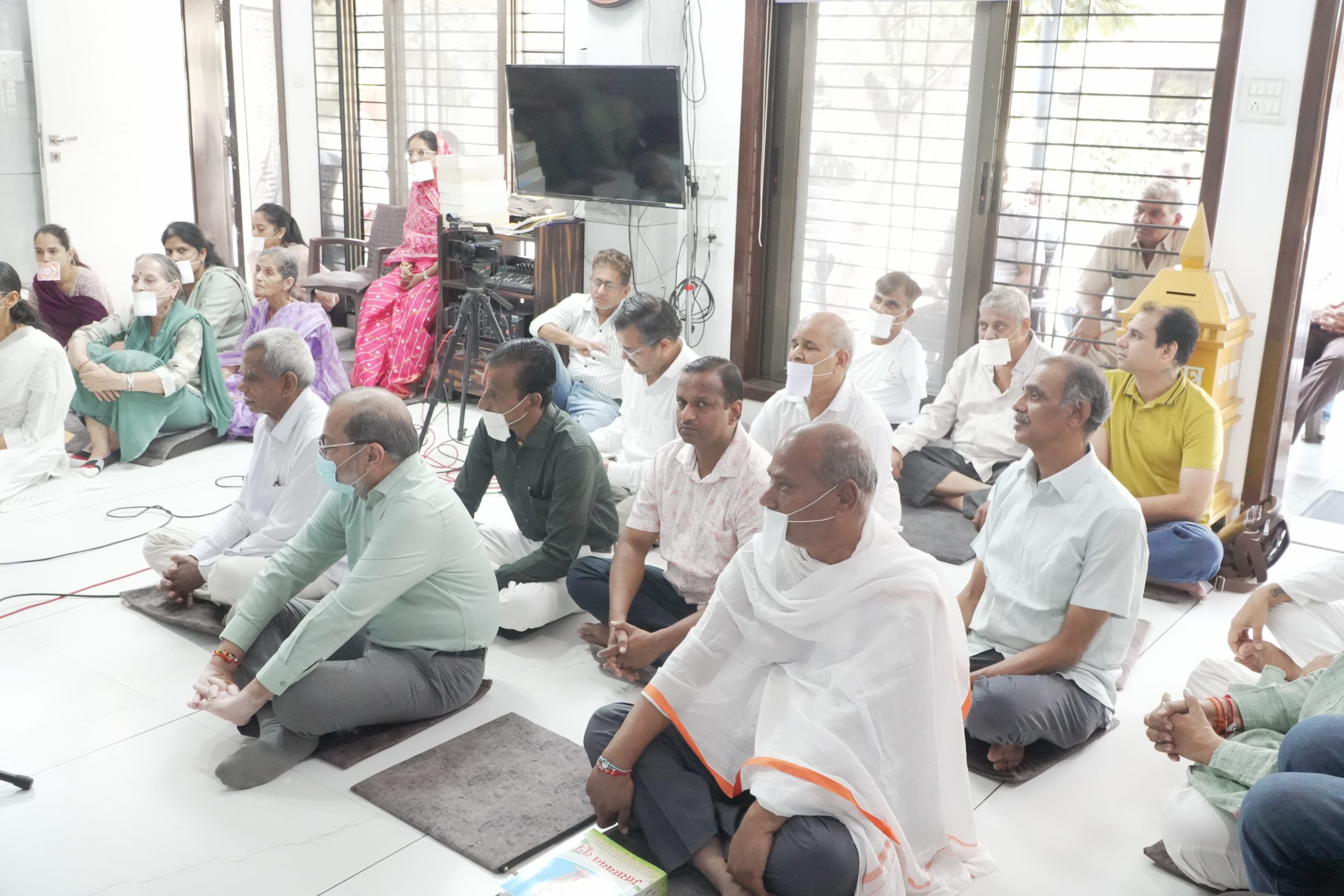
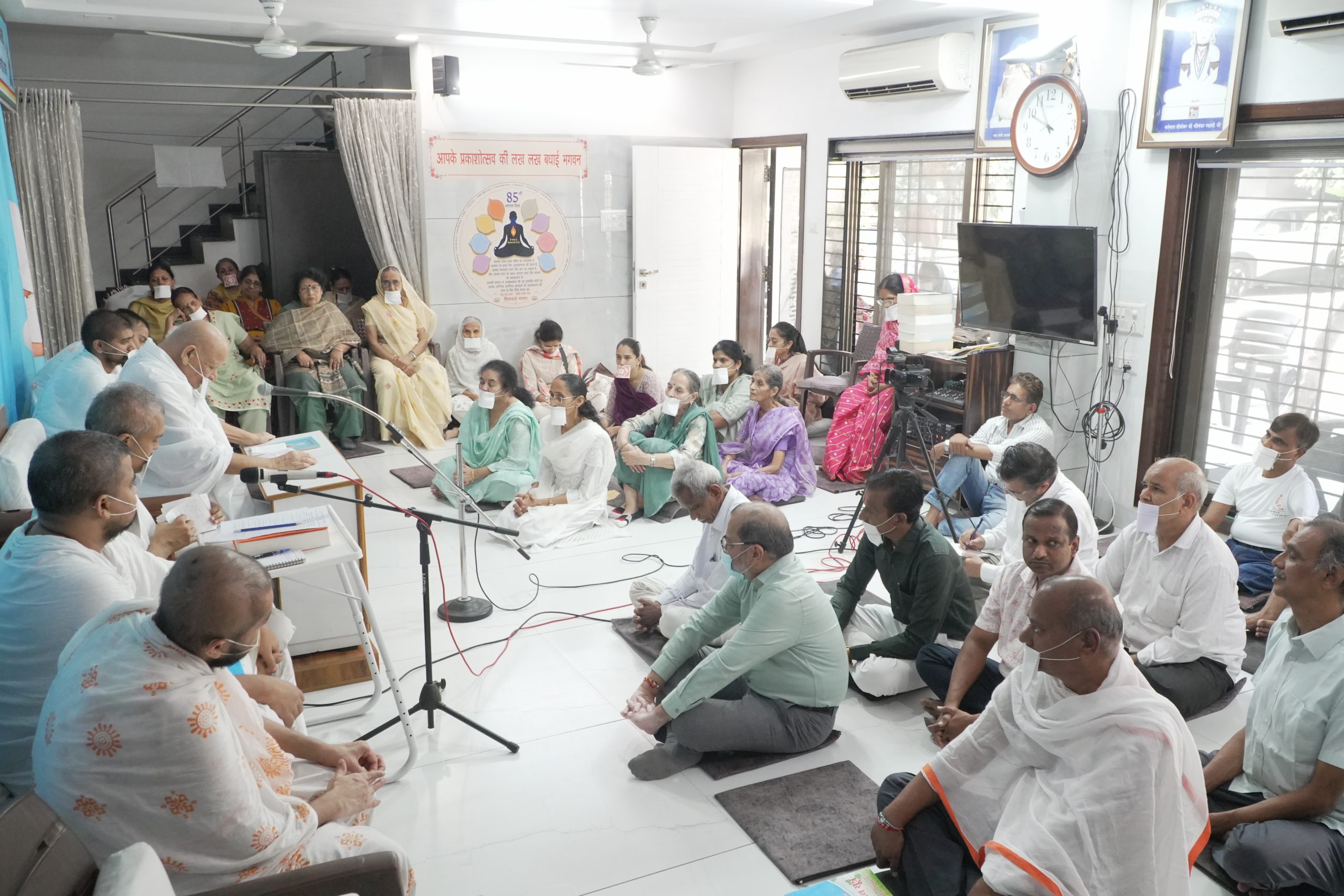
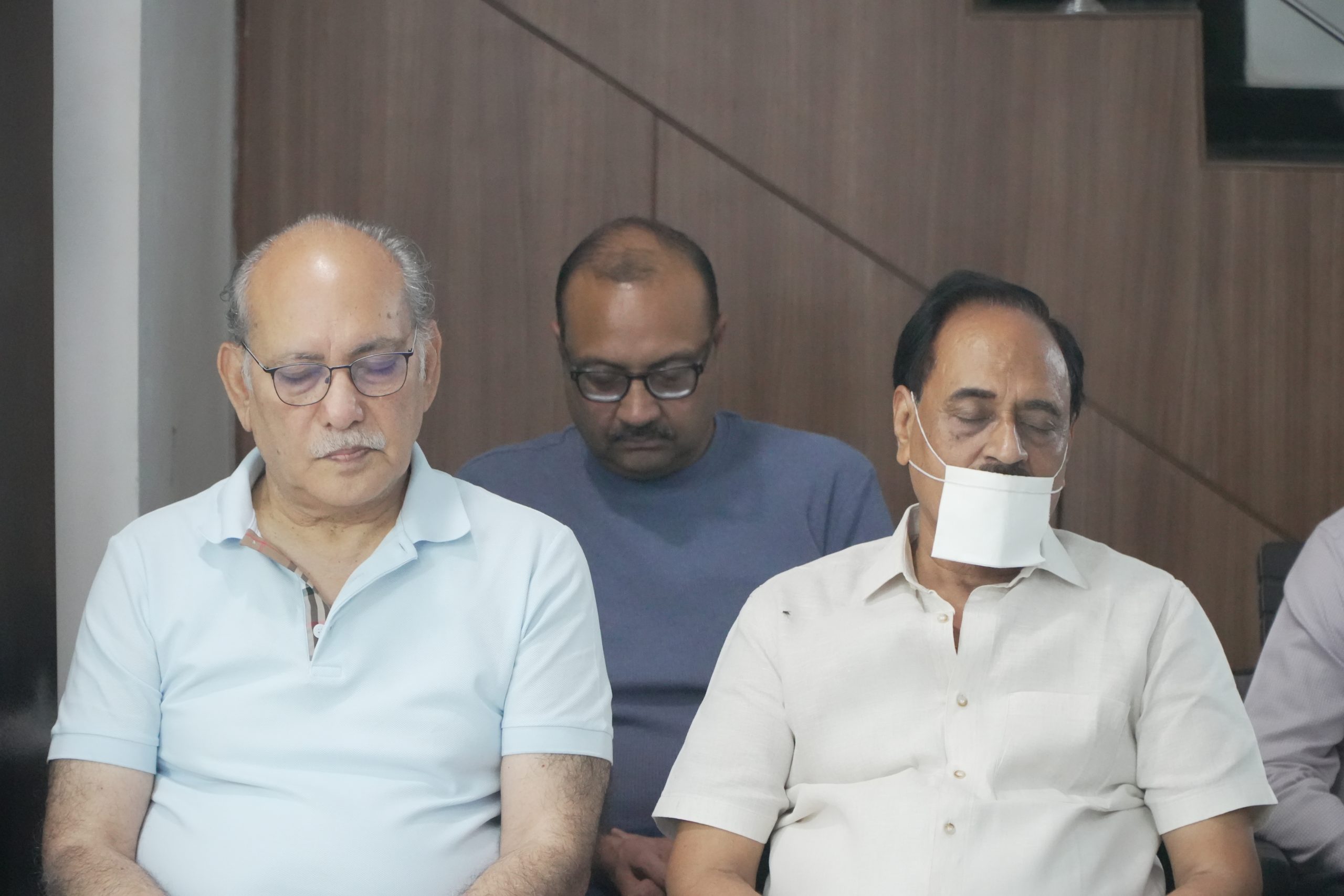
Addressing the assembled devotees, the self-realized spiritual master, Acharya Samrat Dr. Shri Shivmuni Ji M.S., stated that a seeker dedicated to the soul constantly dwells within the soul. By dwelling within the soul, one is quickly liberated from the state of being identified with the external self (bahiratma) and enters the realm of the inner self (antaratma), ultimately attaining the supreme state.
He further questioned whether one who has studied many scriptures, is highly eloquent, possesses the power to influence thousands with their speech, and can deliver sermons based on various texts, can truly be considered ‘enlightened’ (gyani). From the perspective of the soul, a truly enlightened person is one who lives in their own ‘true nature’ (svabhava)—that is, one who dwells within their own soul and remains rooted in their own existence. A being who has forgotten their own existence—their soul—has been wandering through the cycle of birth and death since time immemorial. Without the realization of one’s own existence—without an awareness of one’s own being—one cannot progress. A person who perceives the soul and the body as one seeks the soul within the body and speech. An unenlightened person identifies, perceives, and defines themselves solely through the body, mind, intellect, speech, senses, conditioning, perceptions, and the entirety of their worldly existence. A seeker who understands the true nature of the body and speech perceives the soul and the body as distinct entities; this is known as bhed-jnana (the wisdom of discernment). Without the practice of this discernment, one cannot advance. When an enlightened person looks at an embodied being, they perceive the soul within that being.
Acharya Bhagwan further advised that before forming any conclusions, one should reflect in stillness and contemplate: “What is my true existence? Why have I come into this world?” If one truly embodies the realization—”I am the soul”—one can attain moksha (liberation). This living soul has no need for any material objects—be it wealth, position, prestige, or vehicles. The word of the Lord declares: “I am the living soul (Jivatma), and I possess nothing other than my own self.”
It was further explained that among the 23 objects of the five senses, the 240 mental defilements (vikaras), the entire realm of the mind, and the constructs of the intellect, there is no material element capable of ensuring the ultimate well-being of the soul. Therefore, a spiritual seeker should remain steadfast within their own soul. Dwell within your own self; if questions arise or people gather, let the discussion revolve around the soul. Engaging in trivial or pointless conversation leads to the accumulation of various karmic bonds; hence, one should avoid such idle talk.
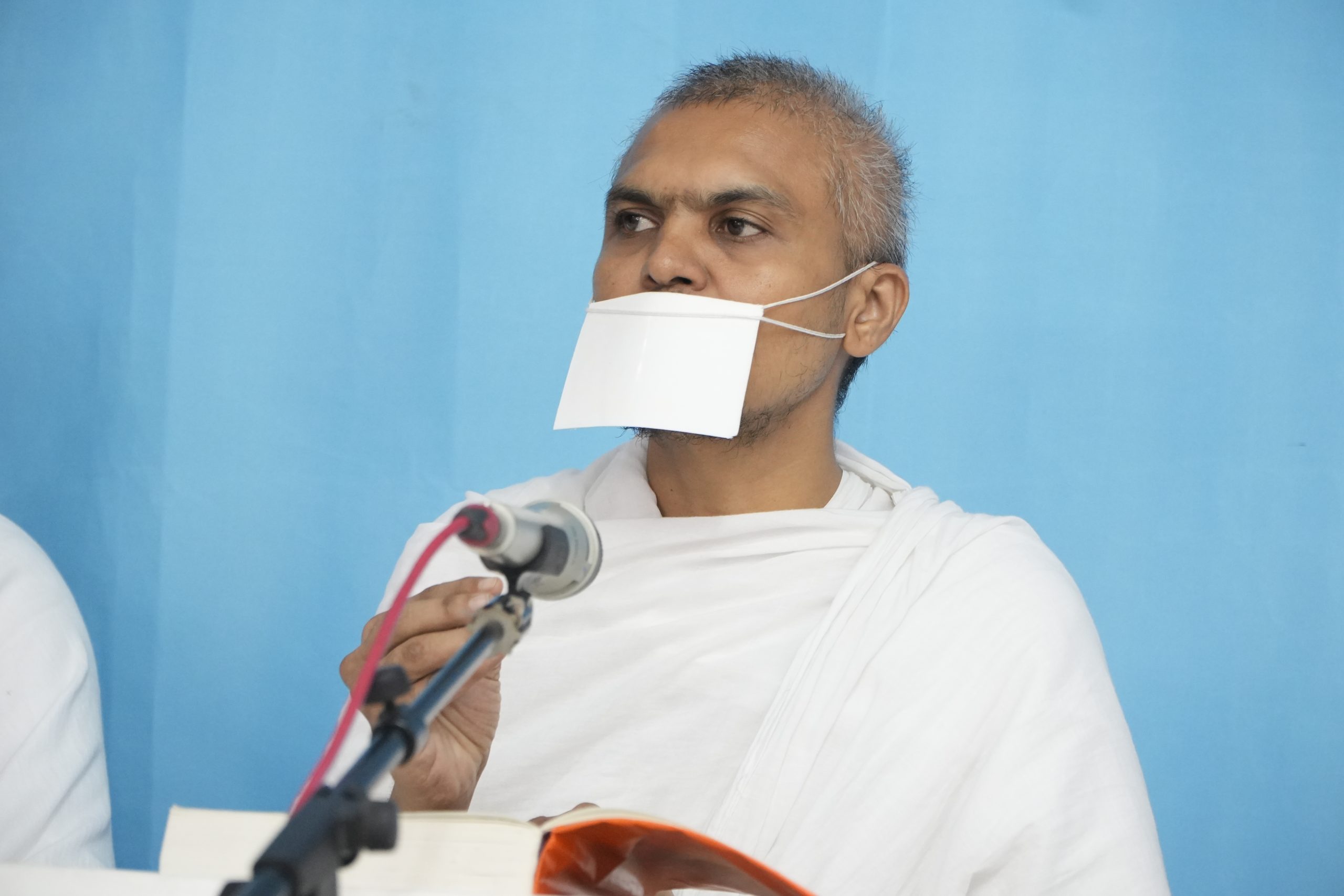
During his discourse on the Uttaradhyayana Sutra, the Yuvamanishi Shri Shubham Muni Ji M.S., noted that many young people often believe that it is not yet the right age for spiritual practice (dharmaradhana). Through the Uttaradhyayana Sutra, the Lord inspires us to realize that one should not assume life will necessarily be long. Some souls depart during the fetal stage, some shortly after birth, some in their youth, and others in old age. Therefore, one should always advance in spiritual practice with constant vigilance (apramatta dasha). Childhood, youth, and old age—all stages of life are suitable for spiritual pursuits. Whenever one engages in spiritual practice, that very moment becomes a time for the shedding of karma (karma nirjara); thus, one should strive toward a state of vigilant, non-negligent awareness.
On this occasion, those who observed the Ayambil Oli—Shri Shaukeen Pokharna, Shri Nemichand Parashar, Shri Anil Mehta, Smt. Jyoti Salecha, Shri Suresh Picholiya, Ms. Pooja Picholiya, and Smt. Shaila Solanki—were honored by the Shivacharya Atma Dhyan Foundation. Ms. Bhavana Bhatevara, who performed the Tela Tap (a three-day fast), was also felicitated.
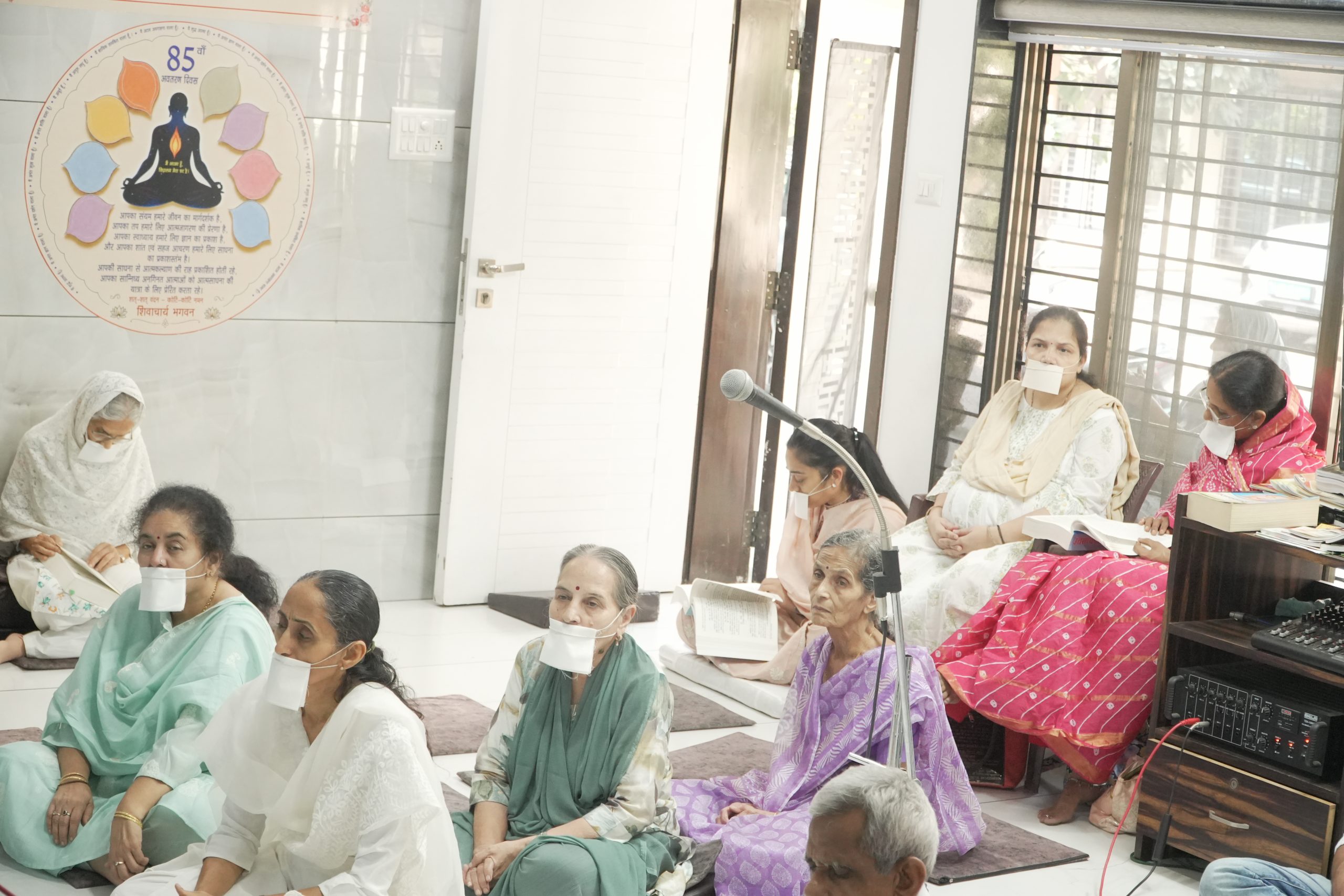
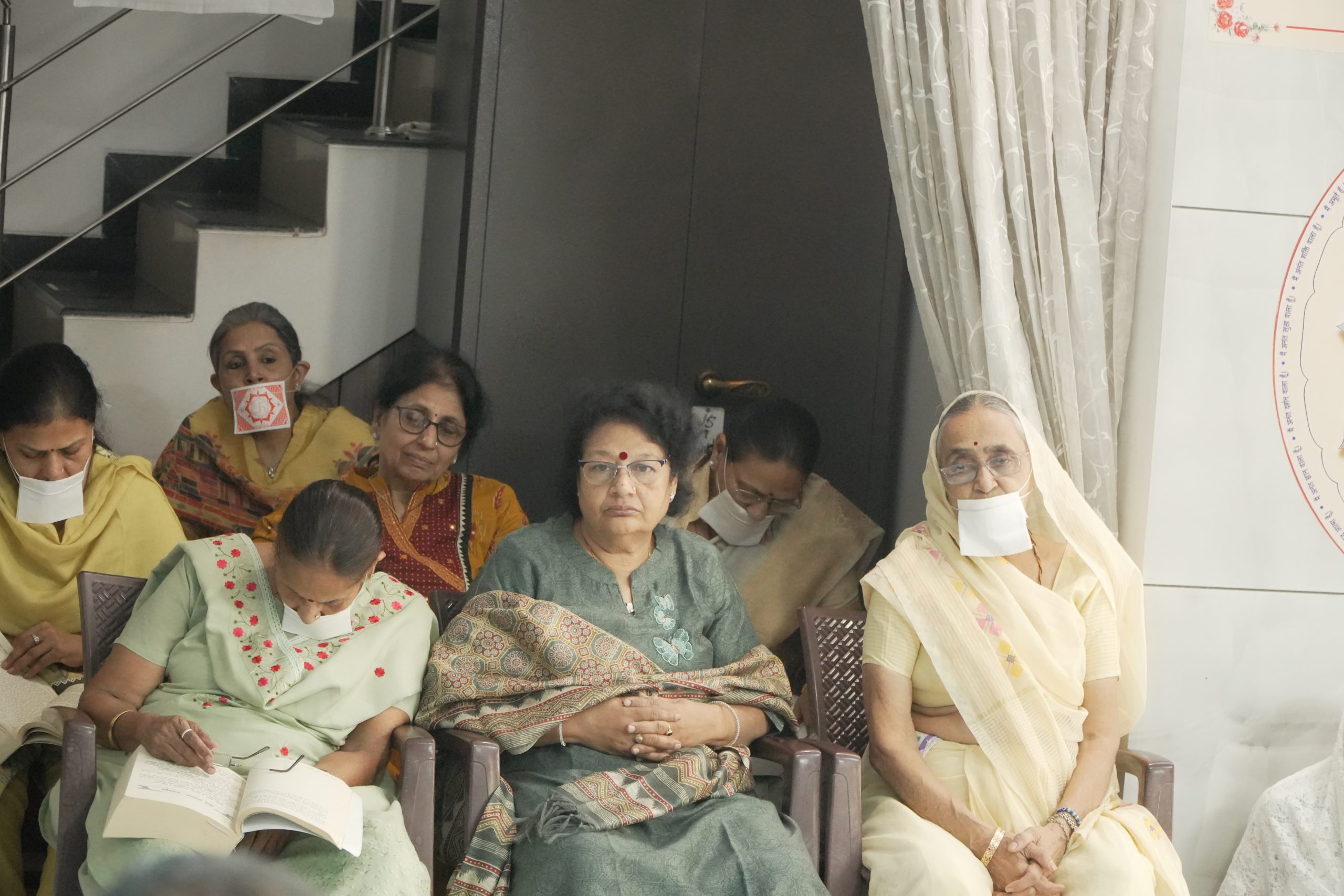
Additionally, Dr. Nagesh Jain and Dr. Abha Jain, who arrived from Delhi, were honored. A group of 15 spiritual seekers from Nashik also arrived to seek the blessings of the Guru. On this day, a collective vow (pratyakhyan) to renounce laddus (a type of sweet) was administered to the participants. On this occasion, devotees from places such as Delhi, Badnawar, Pune, Nashik, Dhule, Jodhpur, and Mumbai were present.