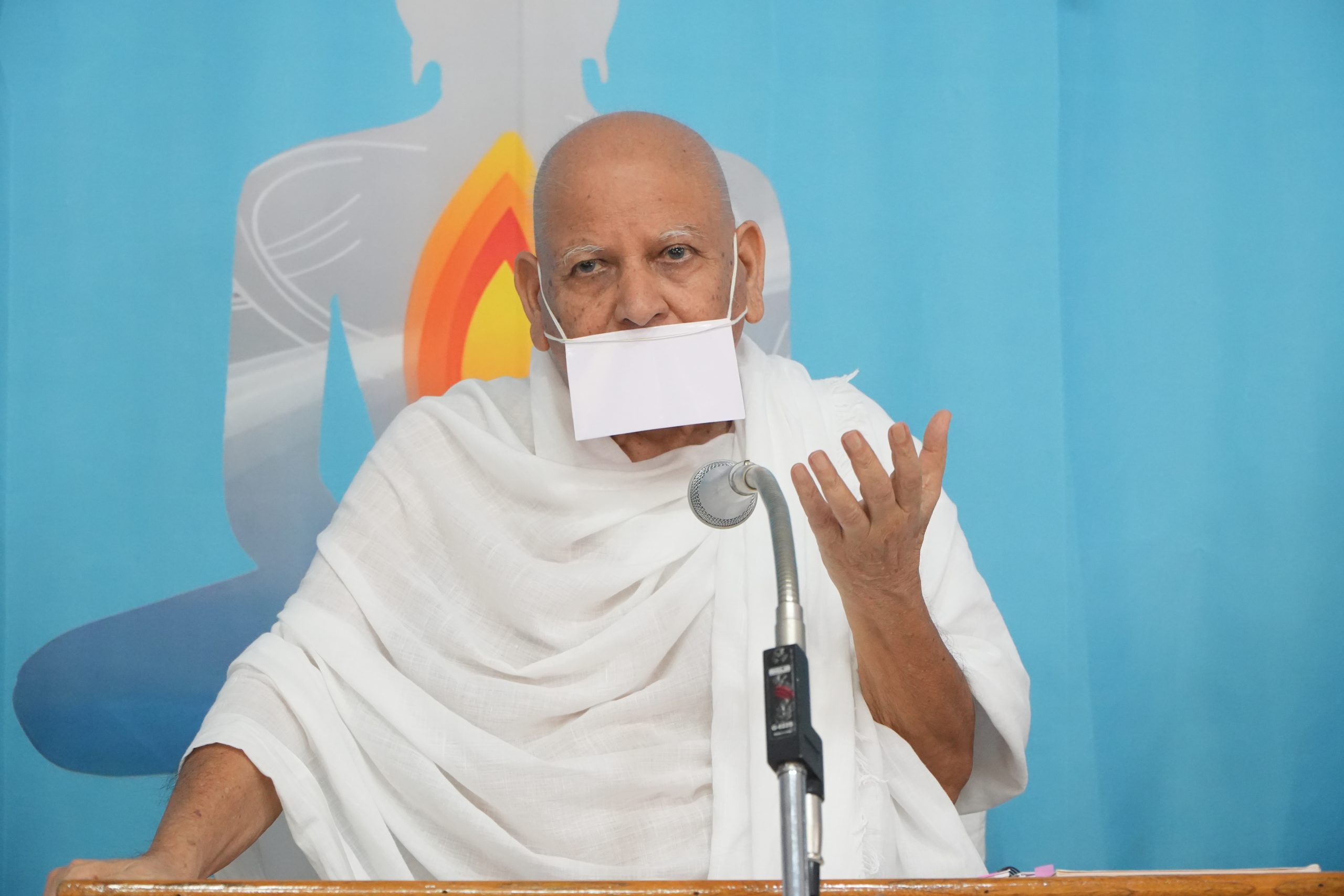
आत्मज्ञानी सद्गुरुदेव आचार्य सम्राट डॉ. श्री शिवमुनि जी म.सा. ने उपस्थित श्रद्धालुओं को संबोधित करते हुए अपने उद्बोधन में पूज्यपाद द्वारा लिखित समाधि तंत्र का उल्लेख करते हुए फरमाया कि व्यक्ति को समय मात्र का भी प्रमाद नहीं करना चाहिए। हर क्षण व्यक्ति के शरीर में भोजन, जल एवं वायु द्वारा नये-नये परमाणु शरीर में प्रवेश करते हैं और गलकर बाहर आते रहते हैं, उस स्थिति में आत्मा में कोई परिवर्तन नहीं होता है।
उन्होंने आगे फरमाया कि जब बच्चा मां के गर्भ से बाहर आता है तो वह एक अणु की तरह होता हैं। मां के गर्भ में इन्द्रियां बन जाती हैं, यदि उस समय का चित्र युवा अवस्था में दिखा दिया जाए तो पहचान नहीं सकते कि यह वही शरीर है। ऐसे व्यक्ति का शरीर प्रतिपल बदलता रहता हैं। इस परिवर्तनशील देह को हम अपना मान रहे हैं, इस कारण इस भव सागर में भ्रमण कर रहे हैं।
उन्होंने यह भी फरमाया कि मनुष्य जीवन सुबह दोपहर और सायं के प्रहर की तरह होता है। सुबह का बचपन उगते हुए बाल सूर्य की भांति, दोपहर की तेज धूप जवानी और सायं सूरज का ढलना बुढापा है। इस परिवर्तनशील शरीर में आत्मा का ध्यान करना चाहिए। जो शरीर का ध्यान करता है, वह संसार में भ्रमण करता है, जो शरीर में रहते हुए आत्मा का ध्यान करता है वह मोक्ष प्राप्त करता है। किसी का शरीर मोटा, पतला, गोरा, काला अनेक रंग-रुप वाला होता है। आत्मार्थी व्यक्ति को शरीर आकार भ्रम से मुक्त रहना चाहिए। परिवर्तनशील शरीर में एक आत्मा ही निराकार है। आत्मा नित्य, निश्छल, निर्विकल्प वाली है। आत्मा के कोई विकल्प नहीं होते सभी विकल्प मन, इन्द्रियां, देह के होते हैं। इसकी धारणा जिसके चित्त में विद्यमान होती है उसे निश्चित ही मुक्ति प्राप्त होती है। मुक्ति को प्राप्त करने हेतु आत्मा में निरंतर रमण करना चाहिए। मुक्ति के लिए आत्मा के गुणों का चिंतन सहायक है।
उन्होंने यह भी फरमाया कि योगाभ्यासी को जनसम्पर्क से दूर रहना चाहिए। जब लोगों के वचन, व्यवहार से संपर्क होता है तब चर्चा चलती है, जिससे मन में मानसिक चंचलता भी होती है, मानसिक चंचलता से मन में संकल्प-विकल्प भी आते हैं। भगवान महावीर जंगल में एकांत साधना करते थे। वे जन सम्पर्क से दूर रहते थे। जन समूह के बीच केवल भिक्षा के लिए जाते थे। किंतु अब वैसा समय, वैसा वातावरण नहीं है। आत्मकल्याण के लिए जनसम्पर्क से दूर रहने से चित्त में विकार नहीं आते और वह साधक आत्म कल्याण के क्षेत्र में आगे बढ़ जाता है।
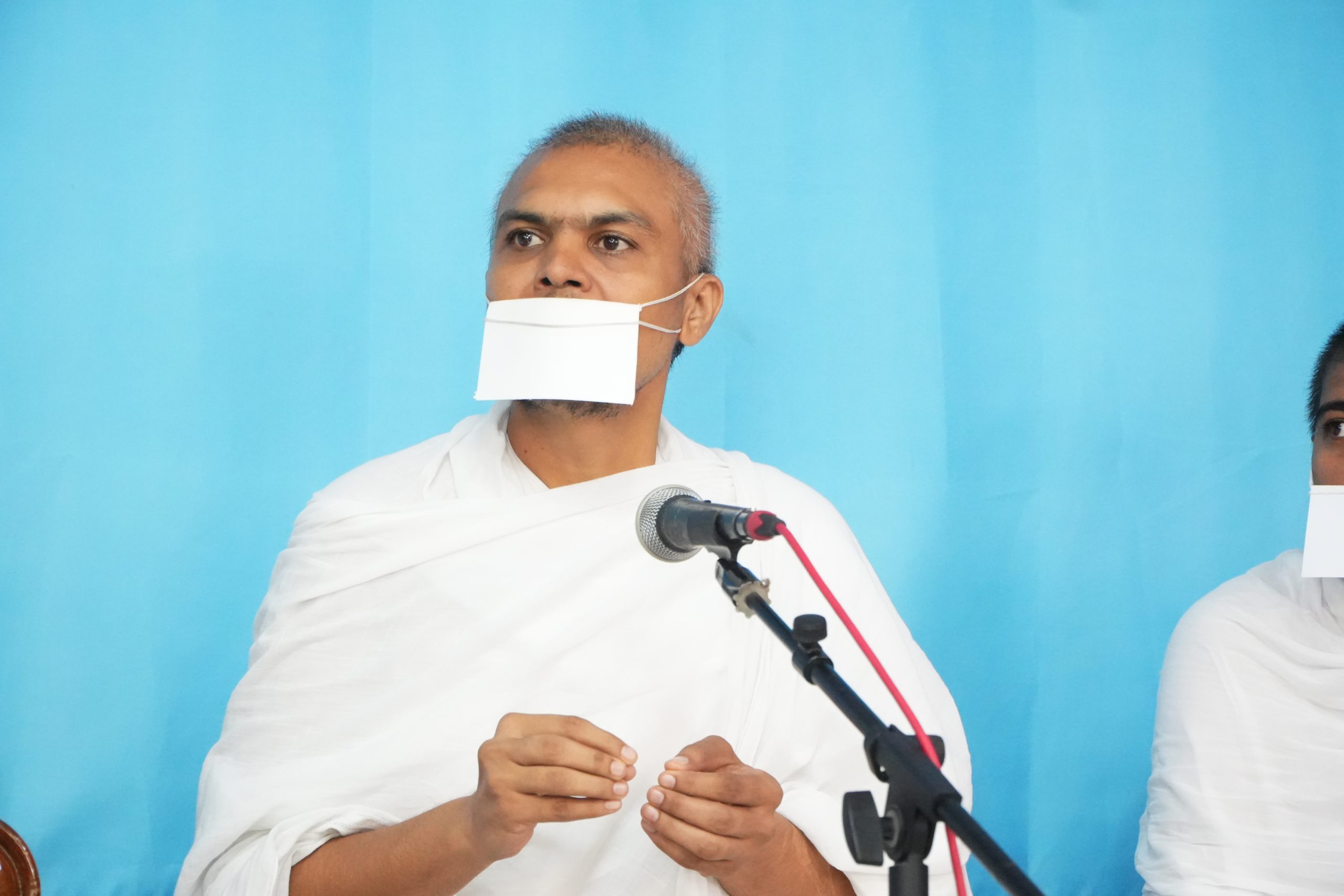
श्री उत्तराध्ययन सूत्र वांचना के दसवें दिन युवामनीषी सहमंत्री श्री शुभम मुनि जी म.सा ने उन्नीसवें अध्ययन मृगापुत्रीय में 99 गाथाओं का मूल वांचन किया। उन्होंने द्रुम पत्रक के विवेचन में फरमाया द्रुम पत्रक यानि वृक्ष का पत्ता। वृक्ष का पत्ता एक अवस्था के बाद गिर जाता है ऐसे ही मनुष्य का जीवन होता है। कुछ पत्ते सुखने से पहले की अवस्था में ही गिर जाते हैं। उसी तरह मनुष्य का जीवन अपने कर्मों के अनुसार बुढापे से पूर्व ही कभी बचपन में, तो कभी जवानी में ही चला जाता है। आत्म विकास के लिए मनुष्य जन्म में मानवता होना आवश्यक है। तत्पश्चात् जिनवाणी श्रवण, श्रद्धा एवं पुरुषार्थ दुर्लभ है। इस अध्ययन के अंतर्गत भगवान महावीर गौतम को संबोधित करते हुए समस्त भव्यात्माओं को समय मात्र का प्रमाद न करने की प्रेरणा देते हैंं। अप्रमत दशा आत्म विकास हेतु आवश्यक है।
ग्यारहवां अध्ययन बहुश्रुत पूजा के विवेचन में फरमाया कि जो स्वयं और दूसरों को बध्ंान मुक्त कराता है वह बहुश्रुत है। जिसके जीवन में अहंकार है, क्रोध, प्रमाद है वह शिक्षा प्राप्त नहीं कर सकता है। स्वस्थ व्यक्ति ही विद्या प्राप्त कर सकता हैं। बहुश्रुत के लिए इन्द्रिय मन का दमन करना और प्रकृति से शांत होना चाहिए।
आज सामूहिक रूप से दूध के त्याग का प्रत्याख्यान करवाया गया।
Addressing the devotees present, the enlightened spiritual master, Acharya Samrat Dr. Shri Shivmuni Ji M.S., referred to the Samadhi Tantra—a text authored by him—and emphasized that one should not be negligent or complacent, even for a single moment. At every instant, new particles (atoms) enter the body through food, water, and air, while others break down and depart; yet, throughout this process, the soul remains entirely unchanged.
He further explained that when a child emerges from the mother’s womb, it is like a tiny particle. The senses develop while in the womb; if one were to see an image from that stage during adulthood, it would be impossible to recognize it as the same body. Indeed, a person’s body is in a state of constant flux. It is because we mistakenly identify with this ever-changing physical form that we continue to wander through the ocean of worldly existence (bhava-sagara).
He also noted that human life mirrors the progression of a day—morning, afternoon, and evening. Childhood is like the rising sun; youth is like the intense, bright sun of midday; and old age is like the setting sun. One should focus on the soul while dwelling within this transient body. Those who focus on the body remain trapped in the cycle of worldly existence, whereas those who focus on the soul—while still inhabiting the body—attain liberation (moksha). Bodies vary in appearance—some are stout, others thin, fair, or dark—but one who seeks the soul must remain free from the illusion of physical form. Within this ever-changing body, the soul alone is formless. The soul is eternal, pure, and free from mental constructs or fluctuations (nirvikalpa). All such fluctuations belong to the mind, the senses, or the body—not to the soul. Whoever holds this realization firmly in their consciousness is certain to attain liberation. To attain liberation, one must constantly dwell within the soul. Contemplating the inherent qualities of the soul is instrumental in achieving this liberation.
It was further stated that a practitioner of yoga (a spiritual aspirant) should remain detached from social interaction. Engaging with the words and behaviors of others leads to discourse, which in turn causes mental restlessness; this restlessness gives rise to a flux of conflicting thoughts and indecision. Lord Mahavira practiced spiritual discipline in the solitude of the forest, remaining apart from the masses. He would enter the midst of people only to seek alms. While the times and environment have changed, the principle remains: for the sake of one’s own spiritual well-being, maintaining distance from excessive social contact prevents the emergence of mental impurities, allowing the seeker to advance on the path toward self-realization.
On the tenth day of the Uttaradhyayana Sutra discourse, the Yuvamanishi Sahamantri Muni Shri Shubham Muni Ji M.S., recited the original 99 verses (gathas) of the nineteenth chapter, Mrigaputriya. In his commentary on the Druma-patraka (leaf of a tree) analogy, he explained that just as a leaf eventually falls from a tree, so too is human life. Some leaves fall before they even have the chance to wither; similarly, depending on one’s karma, a human life may come to an end prematurely—in childhood or youth—well before old age. For the sake of spiritual growth, the possession of humanity is essential. Furthermore, the opportunity to hear the Jin-vani (the teachings of the Jinas), the development of faith, and the capacity for diligent effort (purushartha) are rare and precious. In this chapter, Lord Mahavira, while addressing Gautama, urges all spiritually inclined souls (bhavyatmas) not to waste even a single moment through negligence (pramada). A state of vigilance—free from such negligence—is vital for spiritual evolution.
In the commentary on the eleventh chapter, Bahushruta-puja (reverence for the deeply learned), it was explained that a Bahushruta is one who liberates both oneself and others from the bonds of existence. One who harbors ego, anger, or negligence cannot truly acquire knowledge. Only a person with a balanced and healthy state of mind is capable of attaining true wisdom. For one who is highly learned, it is essential to subdue the senses and the mind, and to possess an inherently calm nature.
Today, a collective vow to abstain from consuming milk was administered.
भारतीय धर्मों में मोक्ष की अवधारणा पर शोध करते हुए मैंने जाना कि सब धर्मों में कॉमन है – ध्यान । तीस वर्षों की मेरी ध्यान साधना का सार है- “ आत्म ध्यान ” । यह कम्प्यूटर के डिलीट बटन की तरह साधक के मन मानस से गैरजरूरी यादें, संस्मरण, नकारात्मकता डिलीट कर देता है। अंतर्मन शांत, शुद्ध और सात्विक हो जाने से आत्म ध्यान का साधक सकारात्मक सोचने लगता है।
WhatsApp us