Commencement of the 21-Day 'Shri Uttaradhyayana Sutra' Recitation Internalize the 'Shri Uttaradhyayana Sutra' to Attain Liberation (Moksha)
21 दिवसीय श्री उत्तराध्ययन सूत्र वांचना का शुभारंभ मोक्ष प्राप्ति के लिए श्री उत्तराध्ययन सूत्र को आत्मसात करें

- आचार्य शिवमुनि

21 October 2026

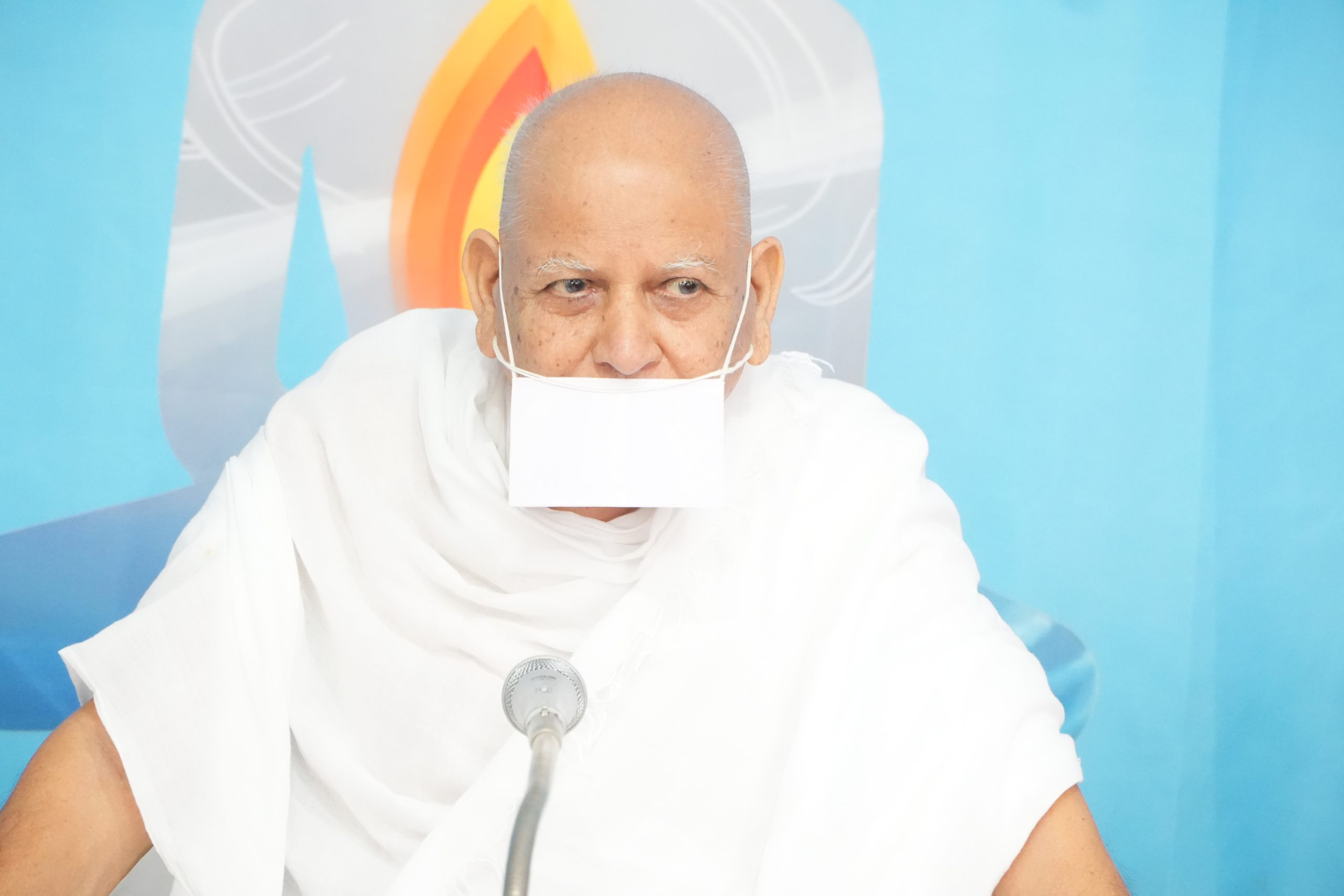
आत्मज्ञानी सद्गुरुदेव आचार्य सम्राट डॉ. श्री शिवमुनि जी म.सा. ने उपस्थित श्रद्धालुओं के मध्य अपने उद्बोधन में फरमाया कि श्री शुभम मुनि जी आज से 21 दिन श्री उत्तराध्ययन सूत्र के माध्यम से भगवान महावीर की वाणी का स्वाध्याय कर रहे हैं। भाग्यशाली हैं वे लोग जो इस वाणी को जानकर, समझकर आत्मासात कर रहे हैं। श्री उत्तराध्ययन सूत्र की वाणी आत्मसात करने वालों के लिए मोक्ष का द्वार बन जाती है।
उन्होंने आचार्य पूज्यपाद द्वारा कृत समाधितंत्र के अंतर्गत फरमाया कि मैं शुद्ध स्वरूप आत्मा हूं, मैं शुद्ध ज्ञानस्वरूप आत्मा हूं, मेरा किसी से राग-द्वेष नहीं है। न मेरा कोई शत्रु है, न कोई मेरा मित्र है। ऐसा व्यक्ति आत्मार्थी होता है। आत्मा में स्थित रहने वाला होता है और वह अपनी आत्मा का कल्याण करता है। उसका जीवन निर्मल स्वच्छ होता है और वह आत्मा में स्थित रहकर कर्मों की निर्जरा करता है।
उन्होंने आगे फरमाया कि जिस साधक के चित्त रूपी जल को राग-द्वेष की चंचल लहरें प्रभावित नहीं कर पाती है वह साधक आत्म तत्व के साथ आत्म साक्षात्कार कर सकता है। जैसे जलाशय में लहरे शांत हैं तो व्यक्ति अपना चेहरा देख सकता है, उसमें बादल के प्रतिबिम्ब को देख सकता हैं। यदि उस जलाशय में लहरे उठ रही है तो वह आकाश की निर्मलता को नहीं देख सकता है और न ही अपना स्वरूप उसमें देख सकता है। इसलिए स्थिरता का महत्त्व है। हम राग-द्वेष के प्रकल्पों से मुक्त हो जाएं। अज्ञानता के कारण व्यक्ति को बोध नहीं हो रहा है और अज्ञान को दूर करने का उपाय है जड़ जीव का भेद कर दृष्टा भाव में रहना। दृष्टा भाव आत्मा का स्वभाव है। जब व्यक्ति ज्ञाता-दृष्टा भाव में रहता है तो वह कर्मों की निर्जरा करता है।
उन्होंने चण्डकौशिक सर्प के दृष्टांत में फरमाया कि चण्डकौशिक जब विभाव में आया तो वह मुनि से सर्प बन गया। व्यक्ति कोई भी गलती विभाव दशा के कारण करता है। जीव अपने स्वभाव में रहे। अपना स्वभाव है जानना और देखना। व्यक्ति स्वयं का अवलोकन करे कि वह विभाव में या स्वभाव में है। अनादि काल का मिथ्यात्व और मोह विभाव का कारण है। व्यक्ति अपने स्वभाव में रहने का प्रयास करे।
हर व्यक्ति की प्रवृत्ति भिन्न-भिन्न होती है। उसकी प्रवृत्ति देखकर हम क्रिया-प्रतिक्रिया करते हैं तो कर्म बंधन होता है। हम किसी को बदल नहीं सकते लेकिन उसे ज्ञान का बोध दे सकते हैं। भगवान की वाणी भी यही कहती है कि किसी को ज्ञान का बोध दो वह स्वीकार करता है तो उसकी इच्छा नहीं स्वीकार करता है तो भी उसकी इच्छा।
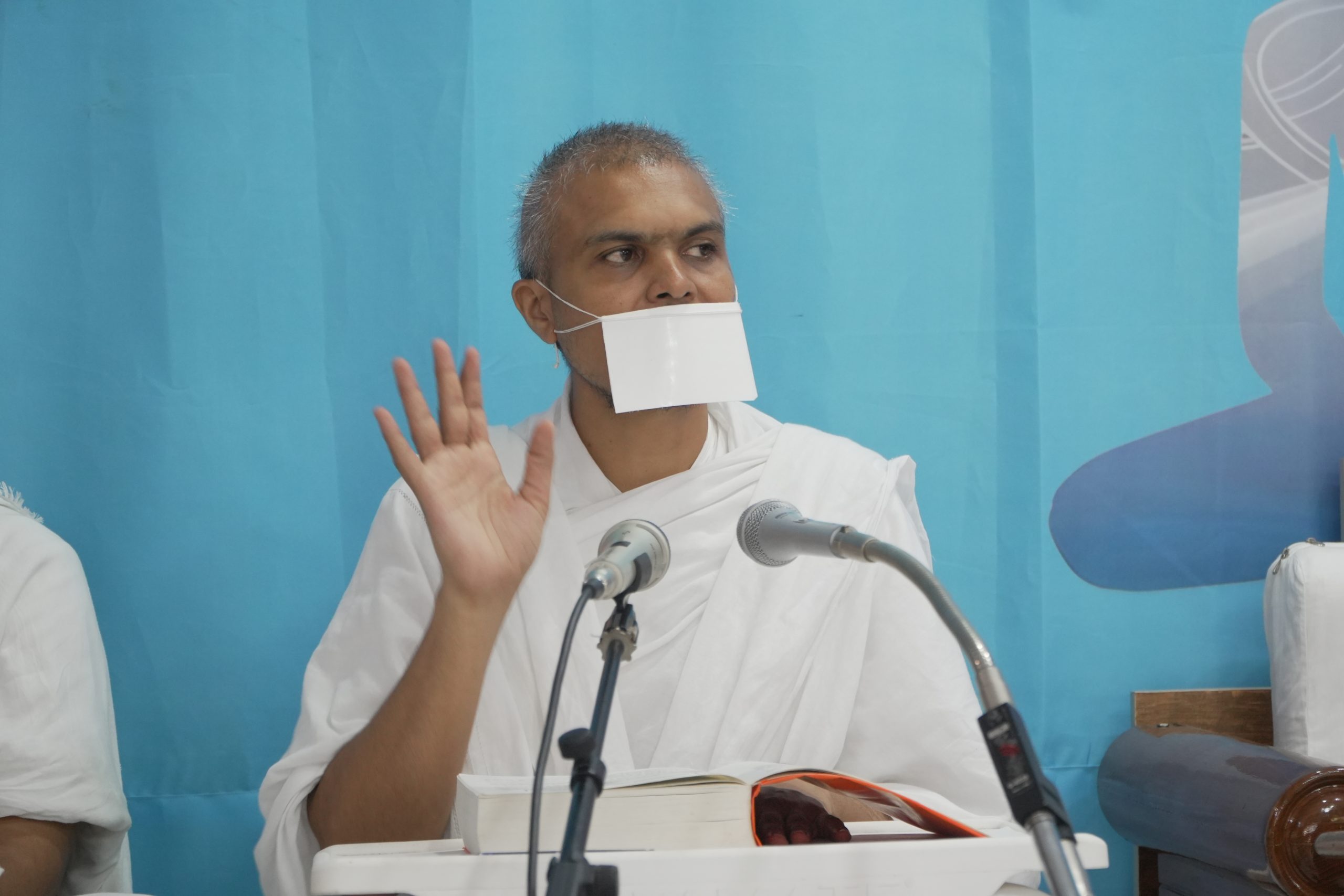
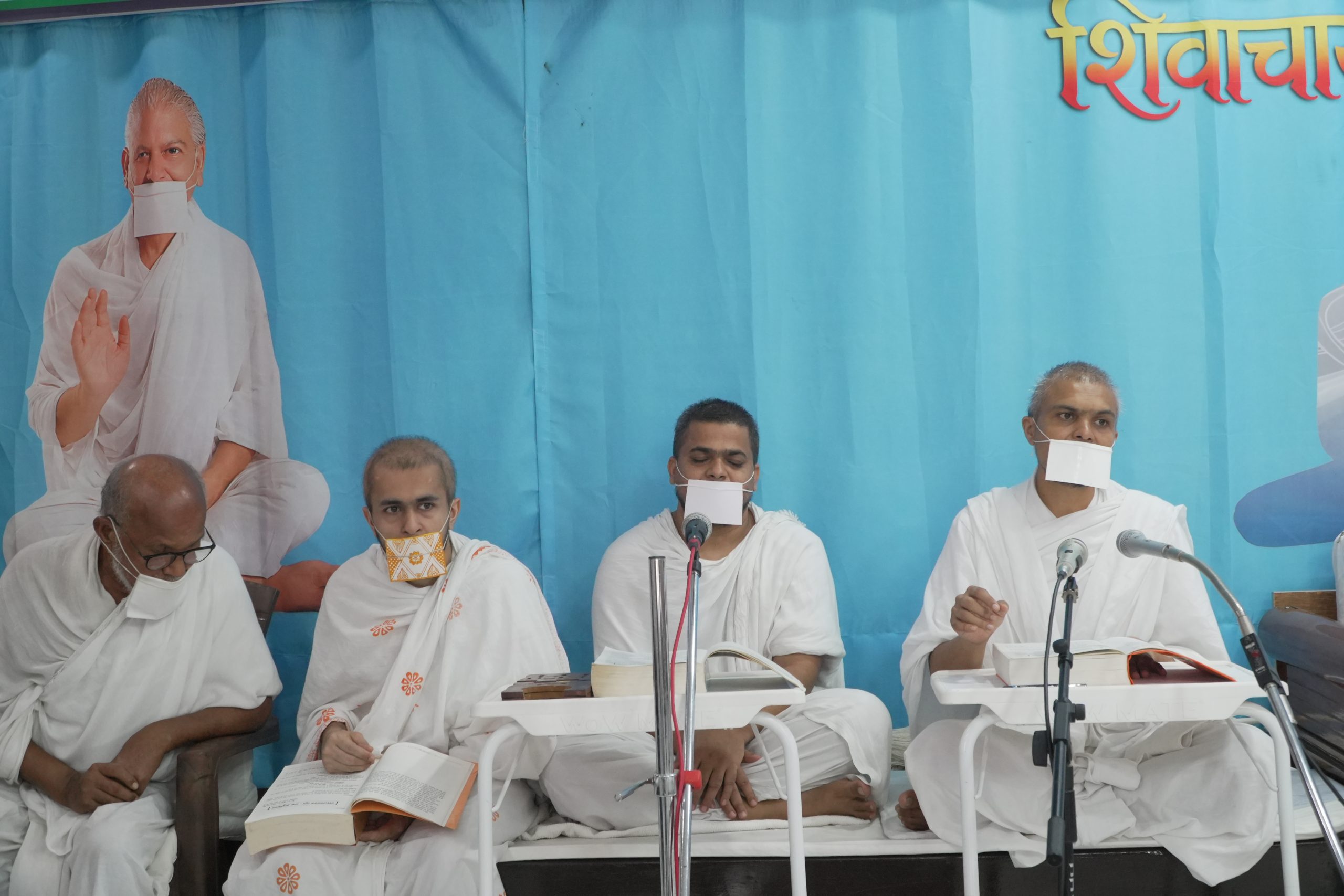
इस अवसर युवामनीषी सहमंत्री श्री शुभम मुनि जी के मुखारविन्द से आज से 21 दिवसीय श्री उत्तराध्ययन सूत्र वांचना प्रारंभ हुई। सर्व प्रथम ‘‘जिनवाणी है पावन सुन लो जिनवाणी’’ भजन की प्रस्तुति दी। प्रथम अध्ययन विनयश्रुत की 48 गाथाओं की मूल वांचना की। उसके पश्चात् विवेचन में 21 दिवसीय अनुष्ठान, धर्म का त्रिवेणी संगम, आगम स्वाध्याय विधि का उल्लेख किया गया। जिसमें बताया कि जैन धर्म पुरुषार्थ में विश्वास रखता हैं। जितना पुरुषार्थ करेंगे उतना मुक्ति के मार्ग पर आगे बढेंगे। प्रत्येक तीर्थंकर के जीवन को देखें तो सभी ने अपने जीवन में खूब साधना की। दीक्षा लेने के बाद एकांत साधना में लग जाते हैं। परमात्मा की साधना ध्यान, तप, कायोत्सर्ग की साधना है। उन्होंने उस अखण्ड साधना के माध्यम से केवल ज्ञान केवल दर्शन को पाया। केवल दर्शन की प्राप्ति के बाद चारों तीर्थों की स्थापना की। जिसमें साधु-साध्वी, श्रावक-श्राविका चारों तीर्थों के लिए अलग-अलग आचार संहिता बना दीं हम संसार में ऐसे रहें हैं जैसे कीचड़ में कमल। हम किस प्रकार पापों से बचते हुए अपने जीवन का यापन करें। अध्ययन, ध्यान एवं तपस्या के द्वारा स्वाध्याय फलिभूत होता है। इस प्रकार किया गया स्वाध्याय हमें कर्म निर्जरा की ओर आगे बढाता है।

In his address to the assembled devotees, the enlightened spiritual master, Acharya Samrat Dr. Shri Shivmuni Ji M.S., stated that, starting today, Shri Shubham Muni Ji will be engaged in a 21-day study of the teachings of Lord Mahavira through the ‘Shri Uttaradhyayana Sutra.’ Those who learn, comprehend, and internalize these teachings are truly fortunate; for such individuals, the ‘Shri Uttaradhyayana Sutra’ serves as a gateway to liberation (Moksha).
Referring to the ‘Samadhi Tantra’—a text composed by the revered Acharya Pujyapada—he explained: “I am the soul in its pure form; I am the soul, the embodiment of pure knowledge. I harbor no attachment (raga) or aversion (dvesha) toward anyone. I have neither enemies nor friends.” Such a person is a seeker of the Self (atmathi); they remain established within their own soul and work toward its ultimate well-being. Their life is pure and pristine, and by remaining anchored in the soul, they facilitate the shedding (nirjara) of their karmas.
He further elaborated that a spiritual seeker whose mind—likened to a body of water—remains undisturbed by the turbulent waves of attachment and aversion, is capable of realizing the true nature of the Self. Just as one can see one’s own reflection or the image of clouds in a calm, still pool of water, one cannot perceive the clarity of the sky or one’s own true form if the water is agitated by waves. This highlights the importance of stability. We must strive to become free from the constructs of attachment and aversion. Due to ignorance, an individual fails to attain true realization; the remedy for this ignorance lies in distinguishing between the insentient (jada) and the sentient (jiva/soul), and remaining in the state of an ‘observer’ (drashta bhava). This state of being an observer is the inherent nature of the soul. When an individual abides in the state of a ‘knower-seer’ (jnata-drashta), they facilitate the shedding (nirjara) of karma.
Citing the example of the serpent Chandkaushik, it was explained that when Chandkaushik fell into a state of ‘deviated nature’ (vibhav), he transformed from a sage into a serpent. Any mistake an individual commits stems from this state of vibhav. A living being should instead abide in their own true nature (svabhav)—which is simply to know and to observe. One should introspect to determine whether they are currently in a state of vibhav or svabhav. Delusion (mithyatva) and attachment (moha), persisting since beginningless time, are the root causes of this vibhav state. One should strive to remain in one’s own true nature.
Every individual possesses a unique disposition. If we react to someone based on their disposition, we end up binding ourselves with karma. While we cannot change others, we can offer them the gift of knowledge (jnana). The teachings of the enlightened ones (Bhagavan) suggest that one may share knowledge; whether the other person accepts it or not remains entirely their own choice.
On this occasion, a 21-day recitation (vanchana) of the Shri Uttaradhyayana Sutra commenced, led by the Yuva-Manishi Shri Shubham Muni Ji. The session began with the devotional song (bhajan), “Jin-vani hai pavan, sun lo Jin-vani” (The words of the Jinas are sacred; listen to them). The original 48 verses (gathas) of the first chapter, Vinaya-shrut, were recited. This was followed by an exposition covering the 21-day observance, the ‘confluence of three streams’ (triveni sangam) of dharma, and the methodology for studying the Agamas (scriptures). It was noted that Jainism places great emphasis on purushartha (self-effort); the more effort one exerts, the further one advances on the path to liberation. A look at the lives of the Tirthankaras reveals that they all engaged in intense spiritual practice (sadhana). Upon taking initiation (diksha), they dedicated themselves to solitary spiritual discipline—comprising meditation (dhyana), austerity (tapa), and kayotsarga (detachment from the body). Through this unwavering sadhana, they attained Kevala Jnana (omniscience) and Kevala Darshana (omni-perception). Following the attainment of Kevala Darshana, they established the four-fold order (sangha) of the Tirthas. Separate codes of conduct were established for the fourfold community—monks, nuns, laymen, and laywomen. We should live in this world like a lotus in the mud—remaining untainted. How can we lead our lives while avoiding sins? Through study, meditation, and penance, svadhyaya (self-study/scriptural study) bears fruit. Svadhyaya practiced in this manner propels us toward karma-nirjara (the shedding of karmas).

For causes
that really matter