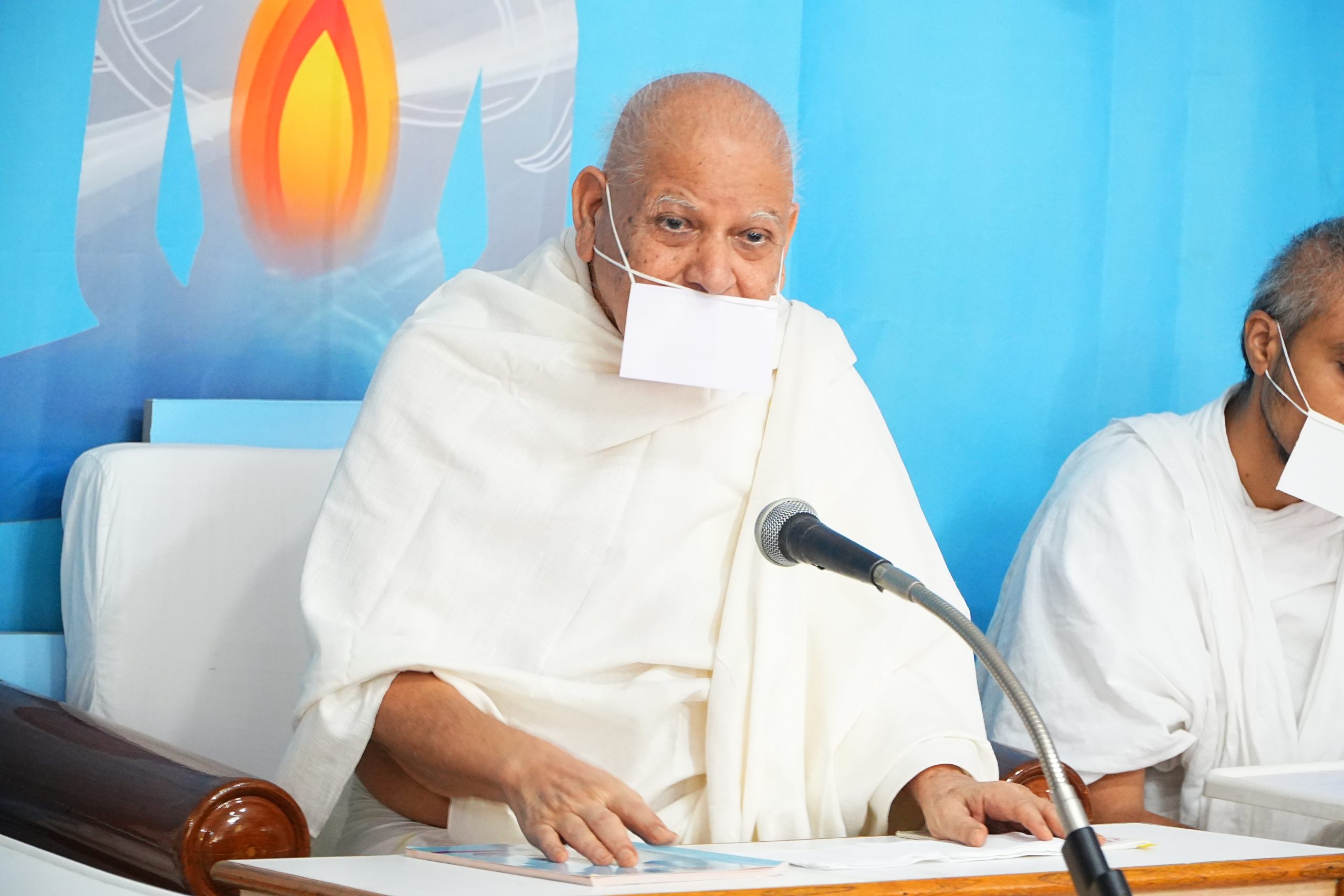
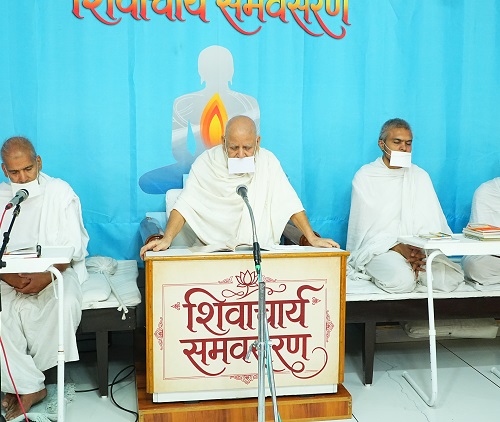
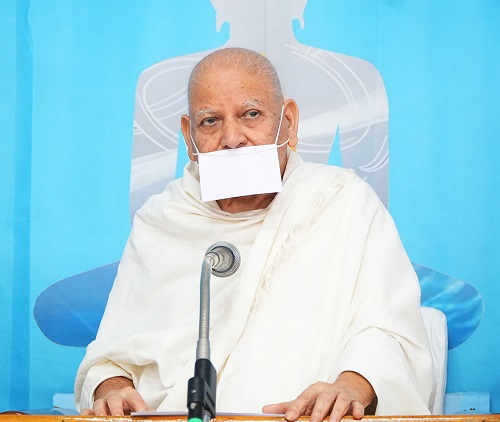
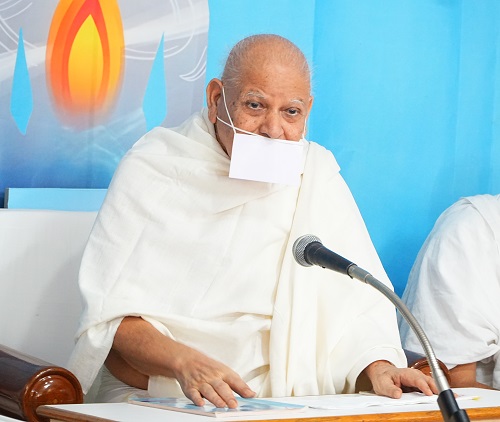
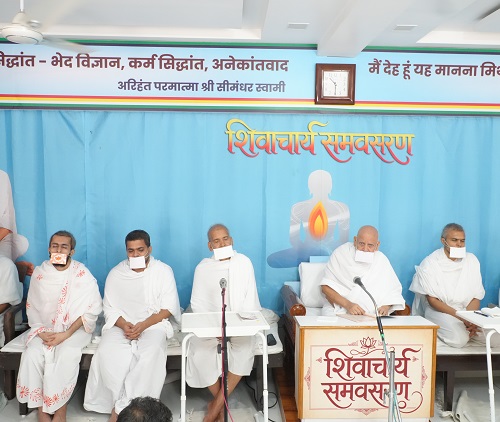
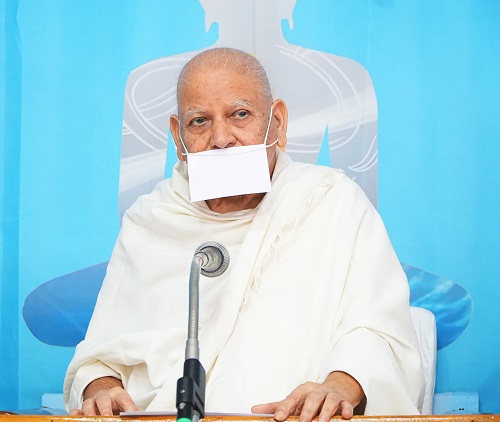
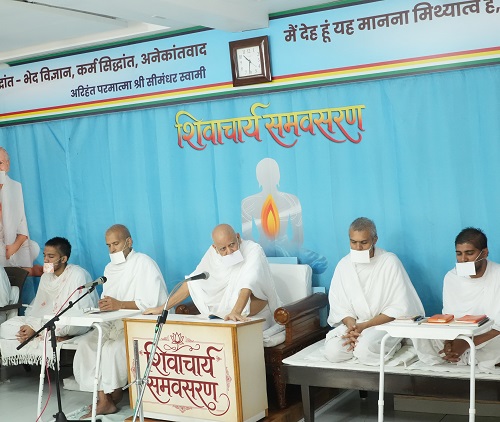
Under the auspicious blessings of the highly revered Dhyan Yogi Acharya Samrat Dr. Shri Shiv Muni Ji M.S., the Shivacharya Atma Dhyan Foundation organized an ‘Atma Dhyan Dharma Yajna’ (a spiritual practice session focused on self-contemplation). On the ninth day of this event, held at the Nashik and Kuppkalan meditation centers, Acharya Bhagwan guided the assembled gathering through the practice of ‘Atma Dhyan’ (self-contemplation). Seekers and spiritual aspirants participating at the meditation centers benefited from this session, which was also broadcast via YouTube.
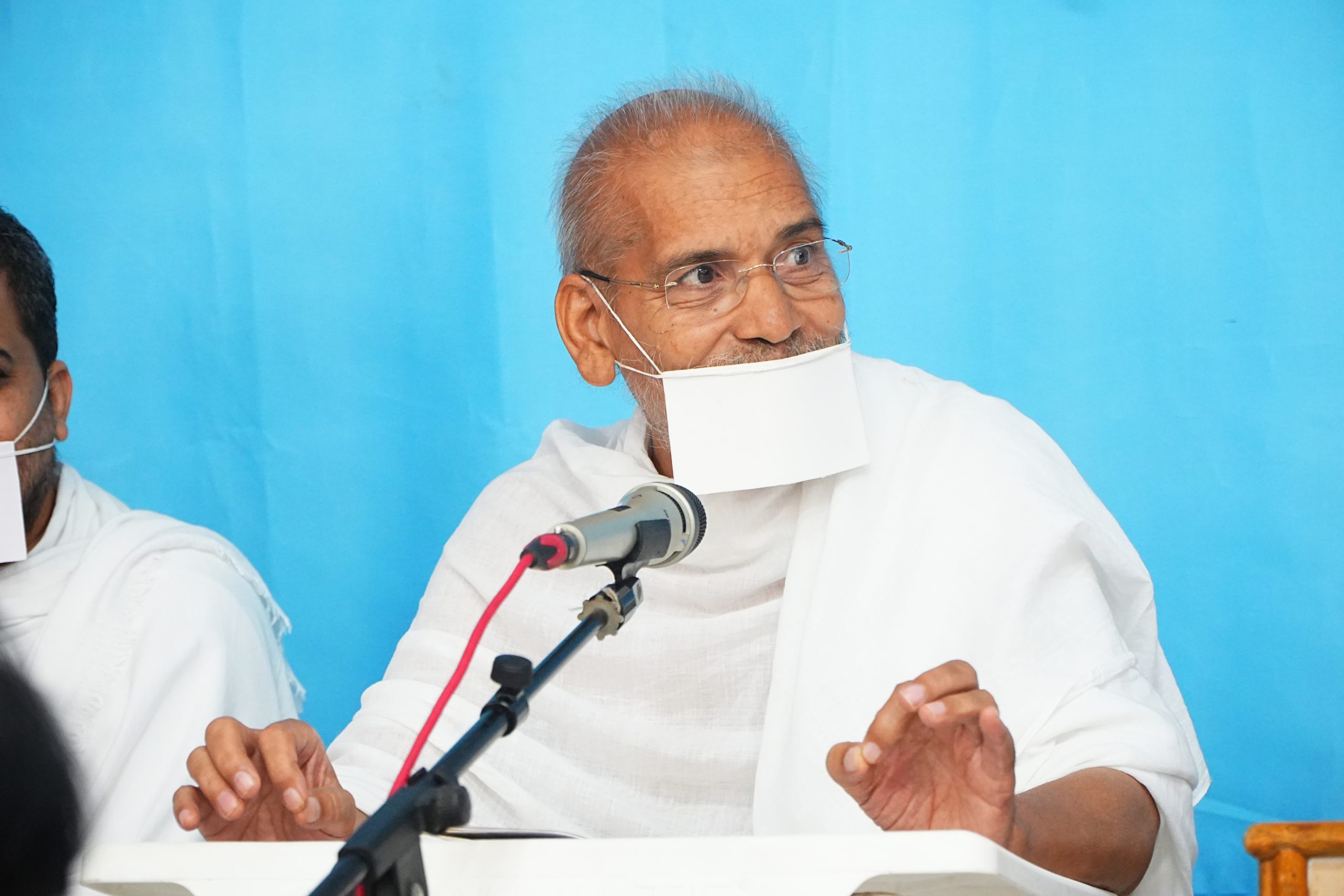
Addressing the gathering, Shraman Sangh Pramukh Mantri Shri Shirish Muni Ji M.S. posed the question: How can we lead a life filled with happiness, peace, and prosperity in a world fraught with ailments, distress, and external entanglements? The key, he explained, is to shatter our illusions. Happiness, peace, and bliss are the inherent nature of the soul. Knowledge is a quality of the soul; however, we often mistakenly believe that the mind, intellect, and senses are intrinsically one with the soul—a fundamental misconception. He offered an analogy: just as one might mistakenly attribute sight to a blind person due to a false perception, we—trapped in the illusion of the body—mistakenly perceive sensory pleasures as true happiness. A person of wisdom keeps their focus on the soul, whereas an ignorant person remains fixated on the body. The ignorant believe that if the body ceases to exist, everything is lost; in contrast, the wise view the body merely as a temporary resting place or a waystation.
He further elaborated that ‘clinging’ or ‘grasping’ is the root cause of bondage. Conversely, relinquishing the attachment to pudgal (matter/material phenomena) from within the depths of one’s being is the path to liberation. Happiness lies in renunciation, while suffering stems from attachment. There exists an infinite amount of pudgal in the external world, not all of which becomes linked to the soul. In reality, pudgal itself never causes suffering to either the body or the soul. Matter (pudgala) has been wandering according to its own nature since beginningless time, while the living soul (jiva) exists within its own nature. Matter does not cause suffering as long as an individual remains within their own true nature. When the soul does not deviate into an unnatural state (vibhava) to attach itself to matter, no matter becomes bound to it.
Discussing the influx of karma (ashrava), it was explained that there are five channels through which it occurs: wrong belief (mithyatva), lack of vows (avrata), negligence (pramada), passions (kashaya), and unwholesome activities of body, speech, or mind (ashubha yoga). In the state of wrong belief, the soul deviates from its true nature, perceives the ‘other’ (external entities) as its own, and becomes attached to them. The karmic matter—which the soul mistakenly identifies as its own—wraps itself around the soul. Matter, by its own power, cannot approach the soul; yet, due to delusion and confusion, the soul perceives the ‘other’ as its own and remains bound to it.
Furthermore, it was noted that a person with proper understanding does not equate the perspective of a lame person with that of a blind person. Similarly, a seeker who possesses the wisdom of discernment (bheda-vijnana) does not confuse the soul’s vision—characterized by knowledge and perception—with the vision associated with the physical body. Such a seeker recognizes the soul as the ‘knower’ and ‘seer,’ rather than identifying with the insentient physical body. A seeker can remain in their own true nature for twenty-four hours a day, whereas they cannot remain in a state of anger for that same duration.
Explaining the distinction between dharma-dhyana (virtuous contemplation) and shukla-dhyana (pure contemplation), it was stated that dharma-dhyana serves as a staircase leading toward a royal palace. Just as one requires stairs to ascend, dharma-dhyana acts as a support or foundation for reaching shukla-dhyana. This includes practices such as contemplating the inherent qualities of the soul, focusing on the breath, or meditating on the concept of ‘So-ham’ (identifying the self with the ultimate reality). These are all forms of dharma-dhyana. When one enters a state of profound stillness—devoid of any thoughts or mental fluctuations—that is shukla-dhyana. Within dharma-dhyana, one must abandon arta-dhyana (distressed contemplation) and raudra-dhyana (cruel or malevolent contemplation). It is through shukla-dhyana alone that kevala-jnana (omniscience) is attained. Till date, infinite Siddhas have been achieved; taking the support of Dharma Dhyana, those who finally became stable in Shukla Dhyana became Siddhas.
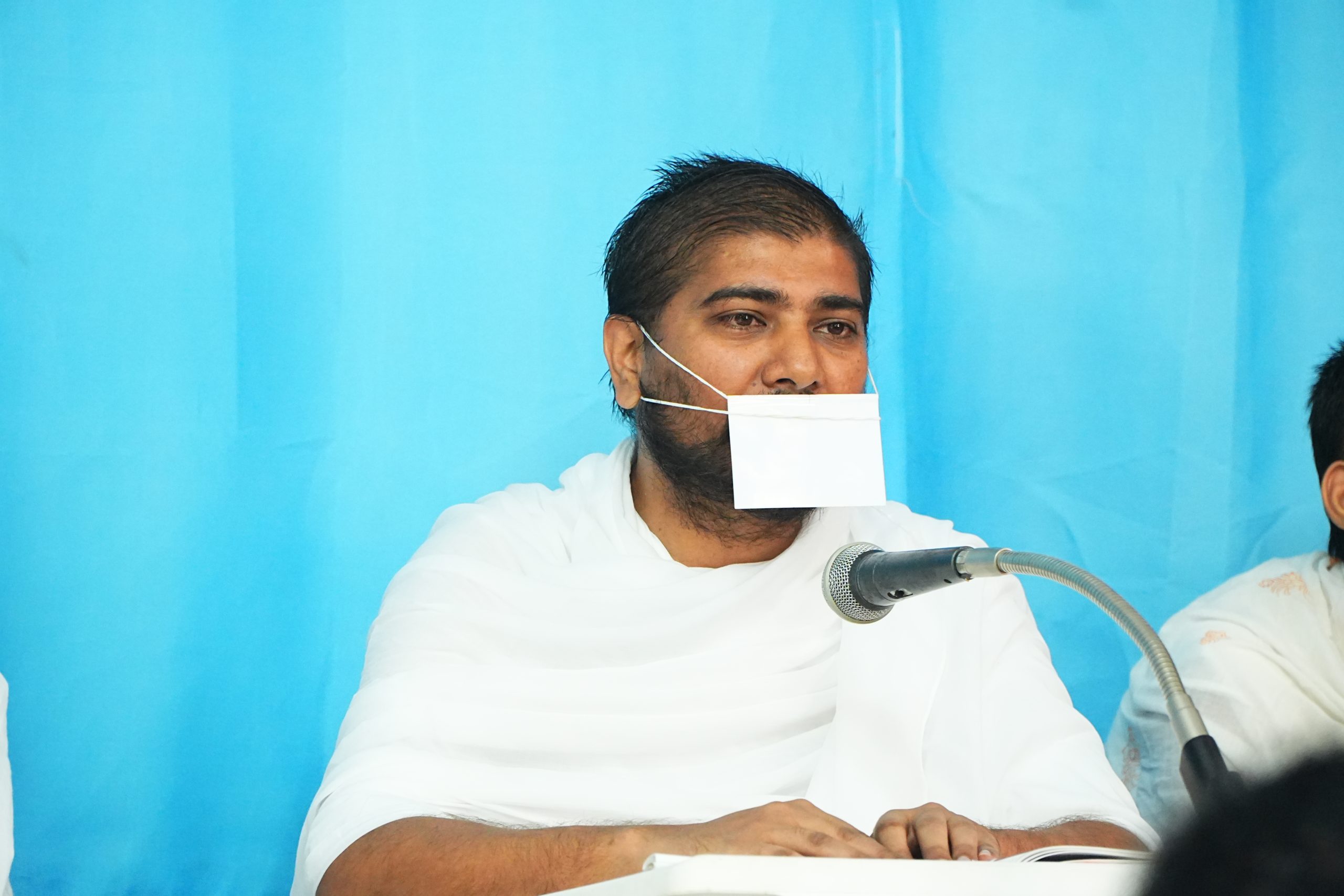
On this occasion, Madhur Gayak Shri Nishant Muni Ji M.S.A. described both sin and virtue as Asrava under Asrava Bhaavna. Visitors from Chennai were present on this occasion.
Special: Acharya Samrat Dr. Shri Shivmuni Ji M.S.A. will visit Adi Thana-10 Chaturmas Purnahuti on 25th November 2026 at 8 am after the first visit of Chaturmasik from Atma Bhavan and will reach Bungalow No. 373, the residence of Shri Tulsi Bhai Chaplot.